






.svg)


There are a few moments in life when your phone being silent feels existentially tragic:
- You post a bomb selfie on your Instagram story and none of your situationships react to it. Not a comment, not a heart-eyes emoji, not even a pity like. Absolutely brutal.
- You give a guy who's definitely not your type a chance because he seemed nice… and he ghosts you after a few dates. Truly heartwrenching. (Riccardo, if you’re reading this, I lied – the way you talk about your mother is creepy, not cute).
- You're an aesthetic practice owner. You're scrolling through your calendar at 9:00 PM on a Tuesday. Three cancellations today. You just posted another 20% off Botox special on Instagram – the fourth one this month – and it's gotten 3 likes. You refresh. Still 3. The treatment rooms that used to be fully booked are now sitting empty most afternoons.
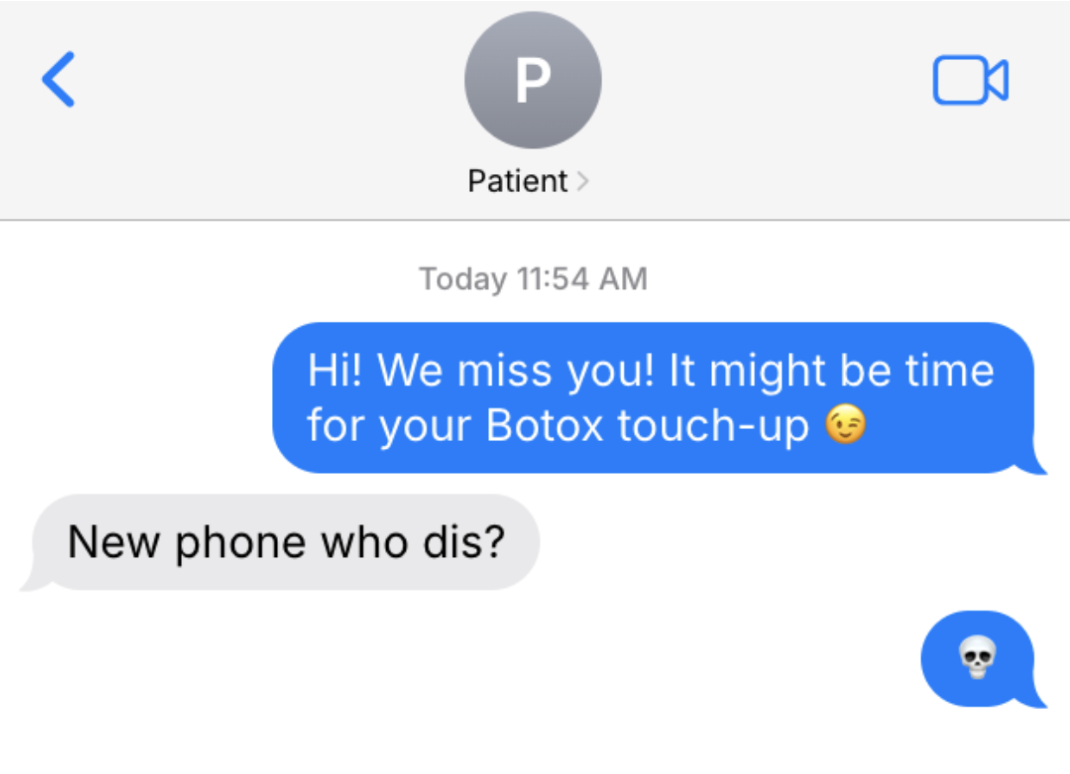
And while in the first two situations you can probably make yourself feel better with a new, hotter crush, a girls’ night out, and maybe a little chocolate over a rom-com, the third one is a whole different level of tricky. Because… what do you actually do when the phone stops ringing? When your revenue starts to drop and it feels like your patients have lost that loving feeling?
This is one of the most divisive questions in the aesthetics market.
Quite simply, there is no one-size-fits-all solution. There is no silver bullet that fixes every problem. Context really matters. Who you are really matters. And most importantly, who your patients are really matters. And because this answer is not only multi-layered and complex, but so crucially important to the health of YOUR practice, I interviewed the best and brightest for their advice – other Incredibles, obviously!
The answers I got were diverse – sometimes surprising, sometimes even conflicting. But I took it all, reviewed the feedback, analyzed the data and put it together into something you can actually start doing today: practical, actionable ways to get more patients into your aesthetic practice when business starts to slow down.
…After all, if I’m an expert at anything, it’s getting the ones who try acting all unavailable to start blowing up the phone again – I’m talking about patients, of course 😉
All you need is the right strategy.
What A Quiet Phone Really Means?
The beginning of the year is usually a busy time for aesthetic practices. After the holiday rush, many of them ride the wave of gift cards, year-end bonuses, and “new year, new me” motivation straight into fully booked schedules.
But this year has been different – and for many practices, unexpectedly quiet.
There can be many reasons a phone goes silent, but let’s assume you’re not dealing with a major underlying issue. No search engine penalties. No reputation crisis.
What you’re seeing is simply a market slowdown – and that’s what makes it tricky. When something that normally works suddenly doesn’t, uncertainty creeps in fast.
- The first place it shows up is cash flow. Fewer inquiries lead to fewer bookings. Fewer bookings mean fewer treatments. And suddenly you’re doing mental math in the middle of the night about payroll, rent, suppliers, and whether that one laser really needs servicing right now.
- Then there’s team morale. Your staff feels it before they say it. Fewer patients mean awkward downtime, quieter treatment rooms, fewer bonuses, and that subtle question hanging in the air: How long is this going to last? Even your strongest team members can start to disengage when momentum drops.
- Finally, it also affects your decision-making – and this is where things get dangerous. A quiet phone creates panic, and panic creates reactive behavior. Instead of actual tactics, you’re starting to follow stress responses. It's like the aesthetics equivalent of the desperate 2 a.m. "you up?" text – and about as effective.
And here's the worst part: all of this compounds.
The cash flow pressure makes you cut corners on marketing. The team morale issues mean your patient experience starts slipping. The reactive decision-making burns through budget on tactics that don't work, which puts you right back at cash flow problems. It's a vicious cycle that can turn a temporary slowdown into a genuine crisis.
And here's where most practices screw it up: they panic.
Discount everything. Kill the marketing budget. Cut staff. Every move feels productive but actually digs the hole deeper. You cannot cost-cut your way to a full schedule.
So, what should you do?
Just run ads? NO! Well… Kinda.
"Just run ads" is the most common advice - but in and of itself, it's certainly not a holistic one.
Let me break down for you exactly why:

Because yes, paid ads do work. But they’re essentially like posting thirst traps on social media – sure, they'll get you some immediate attention and hit that dopamine button, but they probably won't attract many who are actually worth your time:
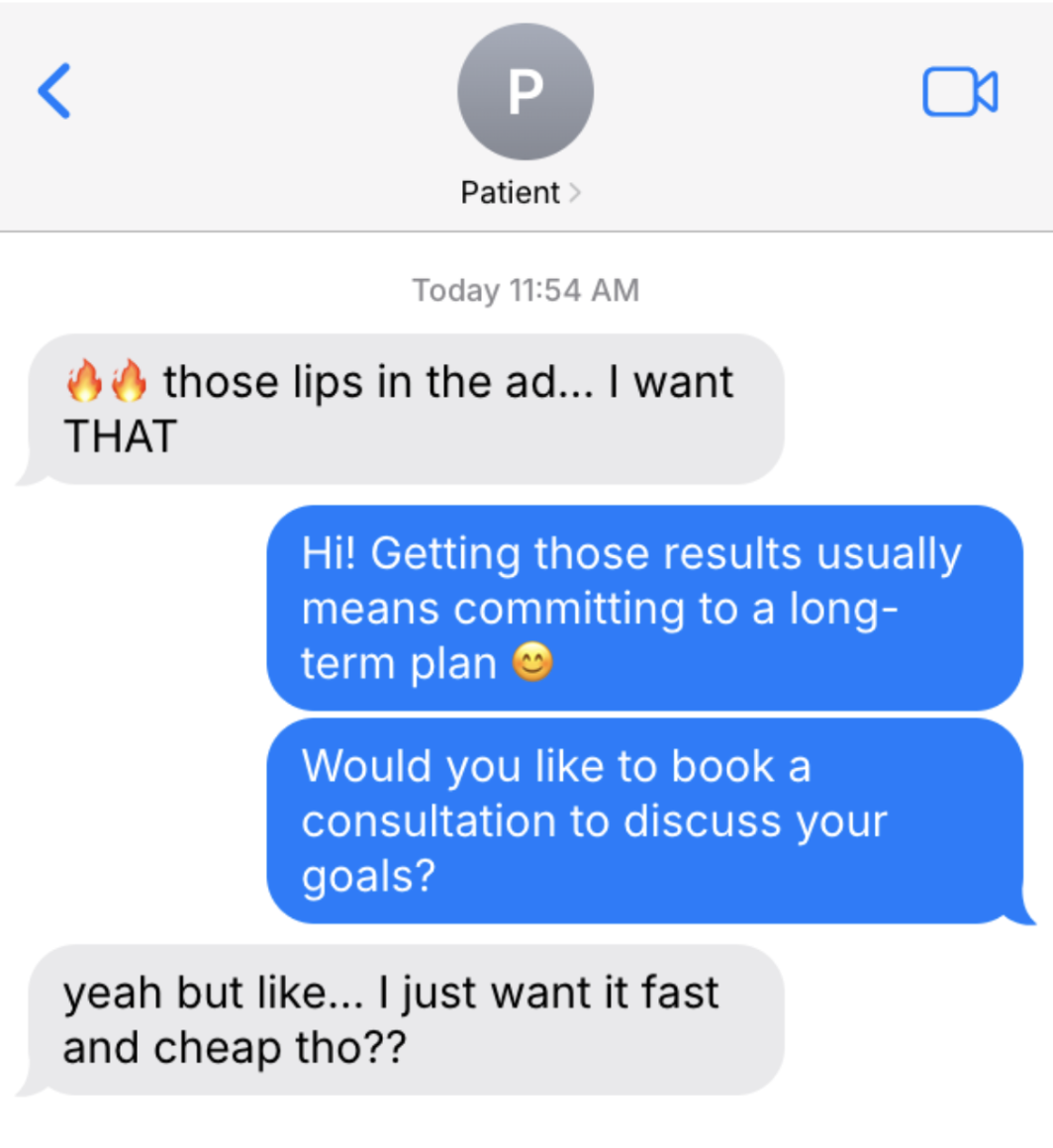
They deliver short-term spikes. Immediate visibility. A little rush of inquiries that feels like progress. But underneath all of that is a dependency you might not notice until it's too late – because the second you stop paying, the phone stops ringing. You're renting attention, not building anything that lasts.
So, what's the right approach?
Look, paid ads aren’t evil. But they’re not a foundational piece of your marketing strategy either. They’re more like a band-aid. A useful one, sure, but still just a band-aid. And if you're going to use it, you need to use it strategically.
If you're going to run ads, here's how to do it right:
1. Match the channel to the intent.
Different platforms serve different goals.
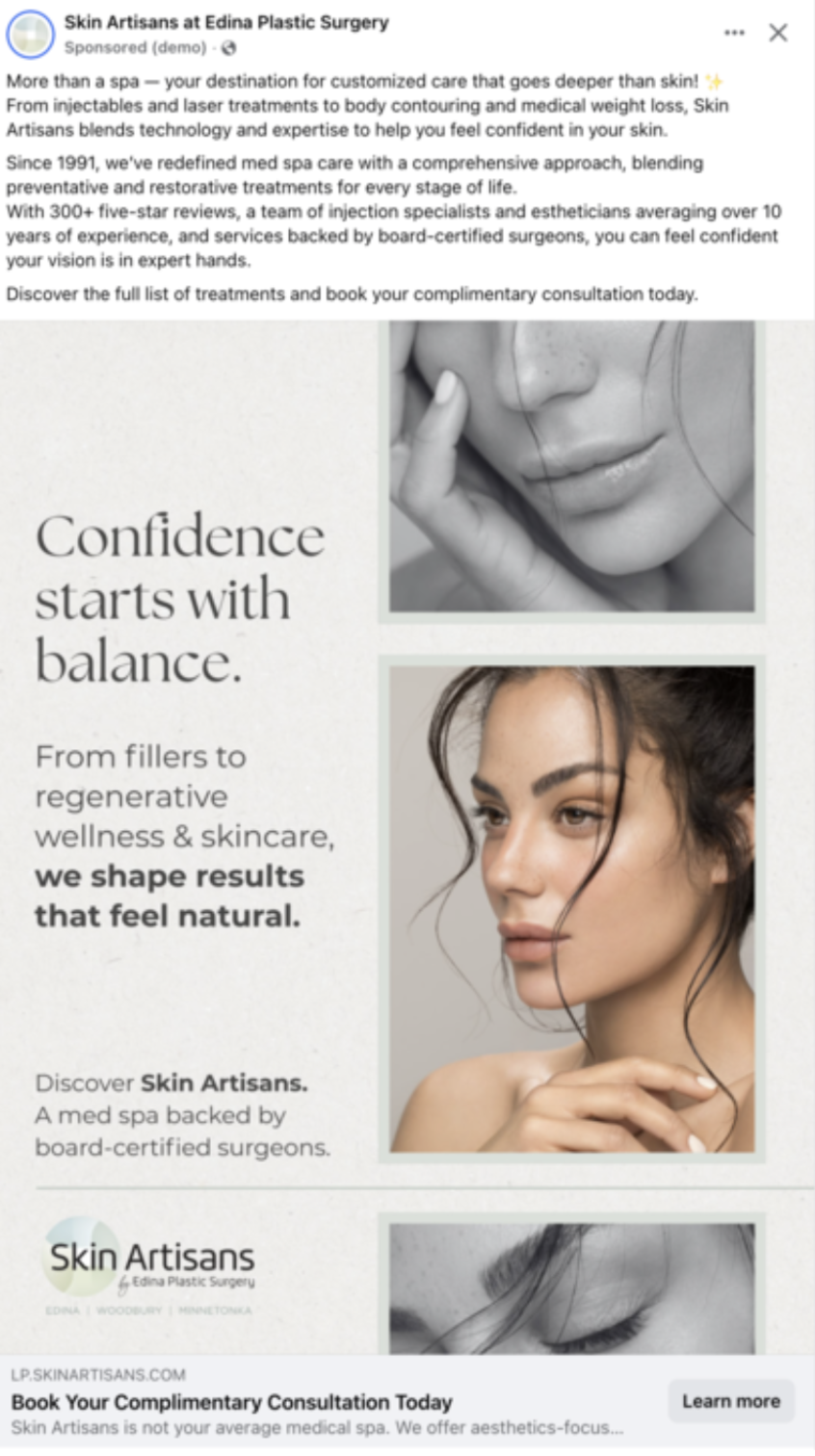
Meta – meaning ads run across Facebook and Instagram – is your playground for non-surgical treatments: Botox, fillers, facials, body contouring, and more. These treatments are more affordable, lower-commitment, visually driven, and often impulse-influenced, making them far easier to advertise to someone casually scrolling who isn't necessarily already considering a procedure.
What do Meta ads look like? Here’s an example:
Google, on the other hand, is perfect for high-intent searches around surgical procedures:
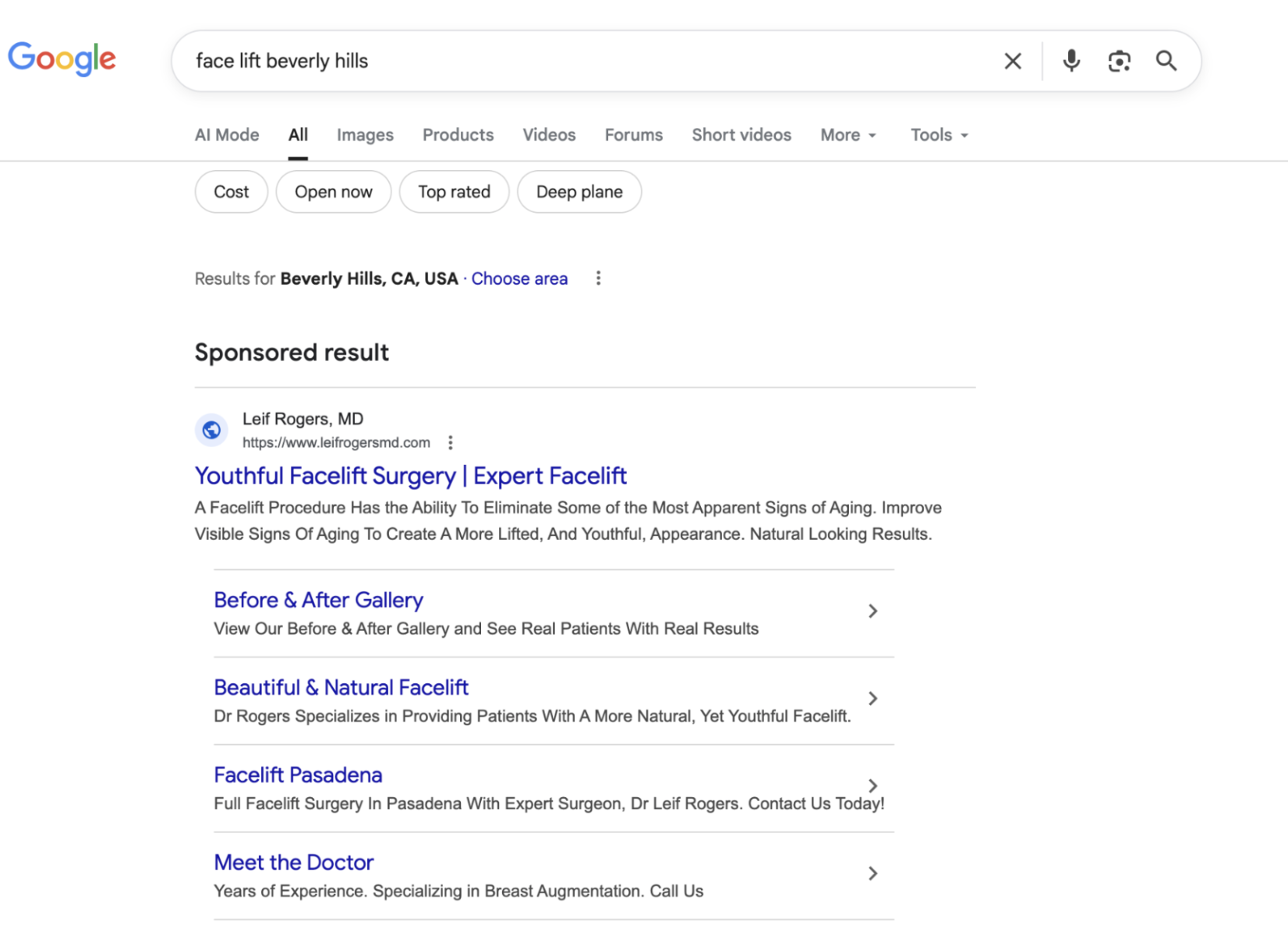
Someone Googling "rhinoplasty near me" or "facelift consultation" is already deep in the decision-making process. They’re not just casually browsing – they’re actively looking for a provider, comparing options, and getting ready to book. Meet them at that moment.
2. Lead with authenticity.
Especially in the age of AI, your ads need to resonate, not just look pretty. The best-performing ads speak to emotions, insecurities, desires, and real patient motivations.
Real patient stories. Before and afters with actual context. A day-in-the-clinic reel. An honest take on why you don't offer a treatment everyone else is pushing. That’s the kind of content that cuts through the noise because it feels human, relatable, and trustworthy.
So what does an ad like this actually look like? Let's break it down.
A good example:
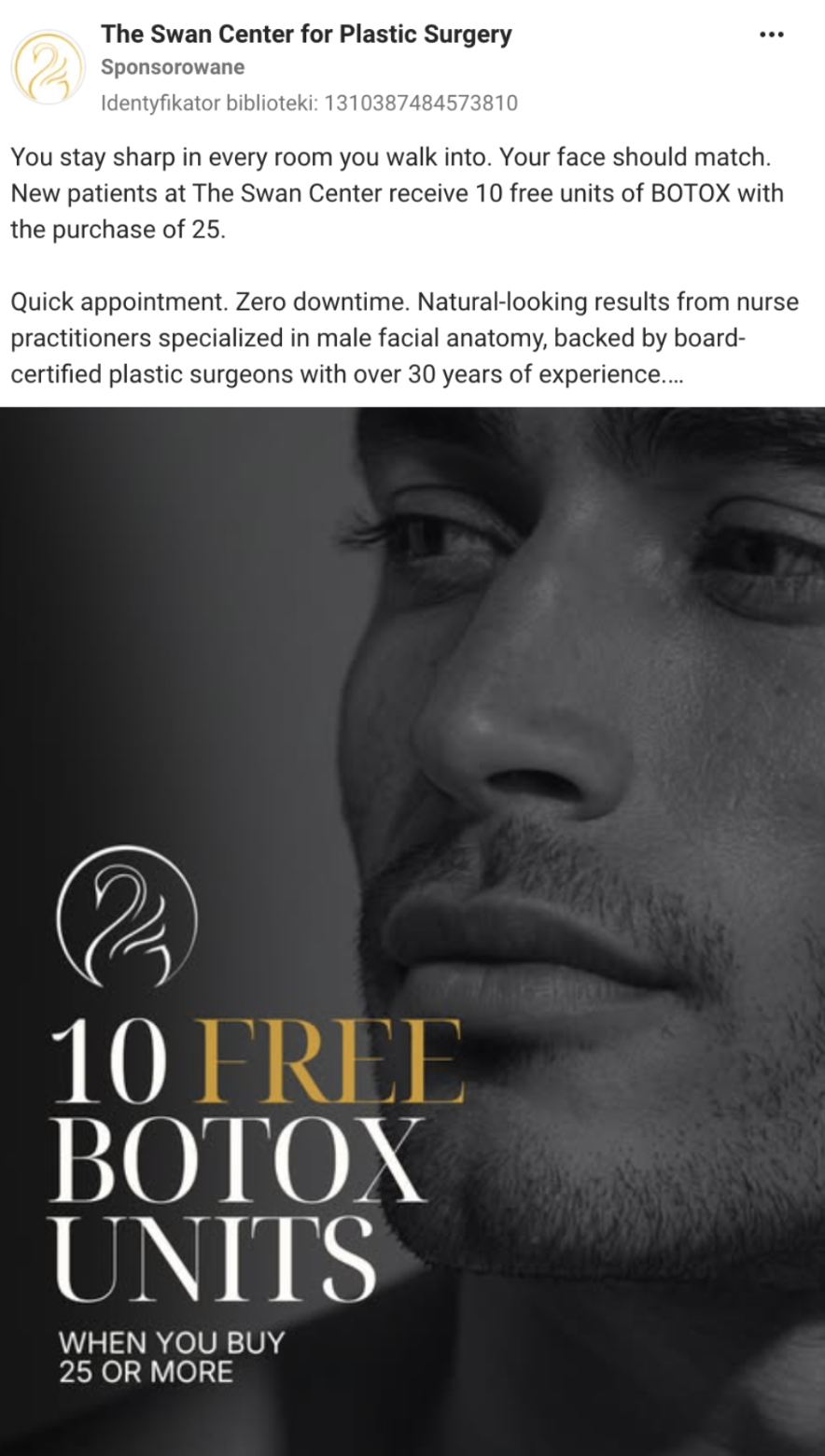
Speaking to a problem many men deal with in silence, and instantly capturing their attention. Because it's not really about Botox, is it? It's about feeling like yourself again. This ad gets that. It taps into something real – that quiet frustration of feeling like your face no longer matches the version of yourself you know you are.
Here’s a bad example on the other hand:
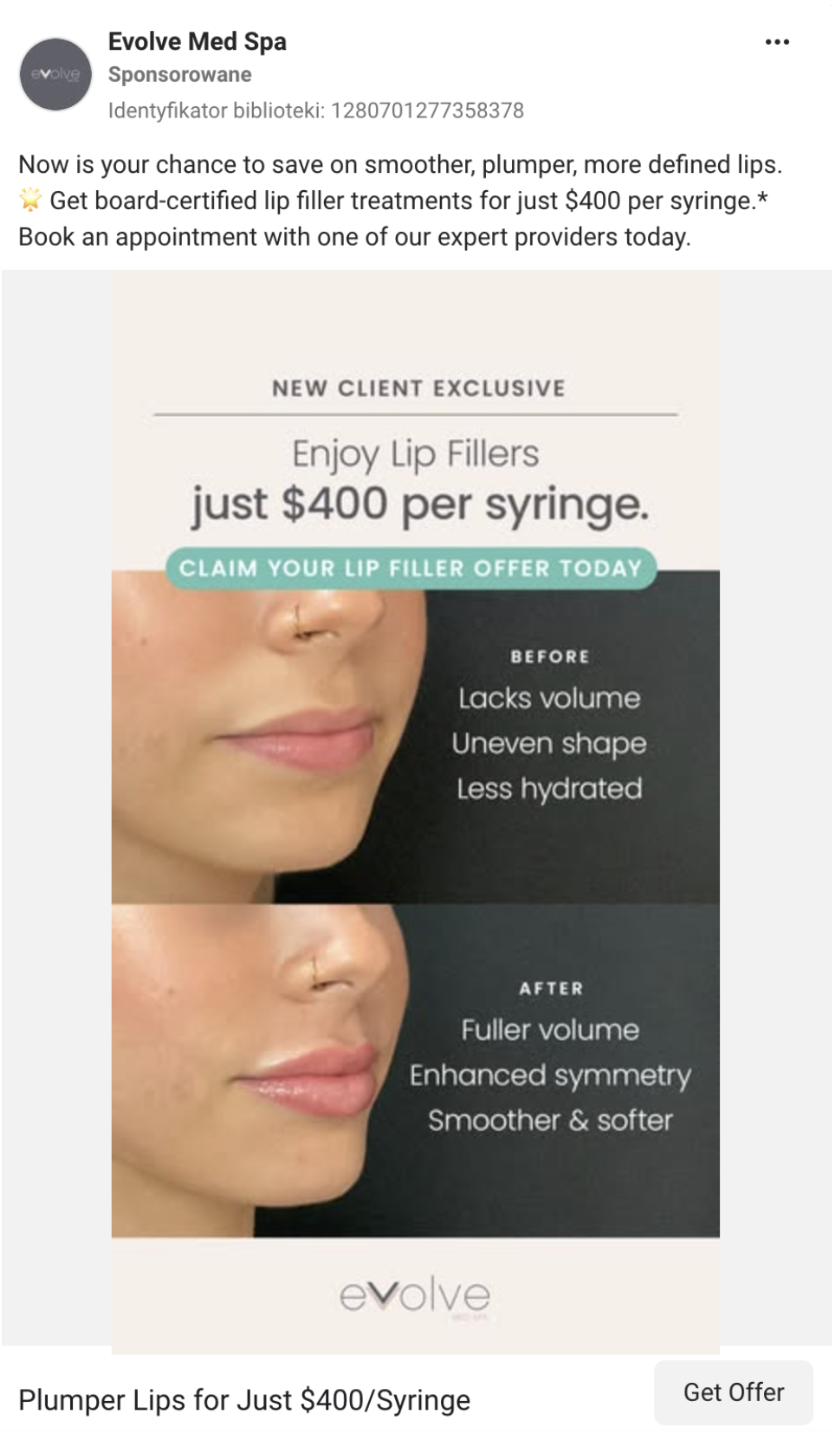
Leading with price and nothing else. There's nothing authentic about it – nothing that makes a patient feel seen or understood. It doesn't speak to how they feel, what they want, or why they're even considering the treatment in the first place.
And beyond the lack of resonance, it attracts exactly the wrong kind of patient – the ones who will leave the moment someone offers them a cheaper deal.
3. Don't sound desperate!
The energy you bring to your marketing is palpable. If your ads scream "please book with us, we're dying here" guess what kind of patients you'll attract? The ones who smell blood in the water and want nothing but a discount.
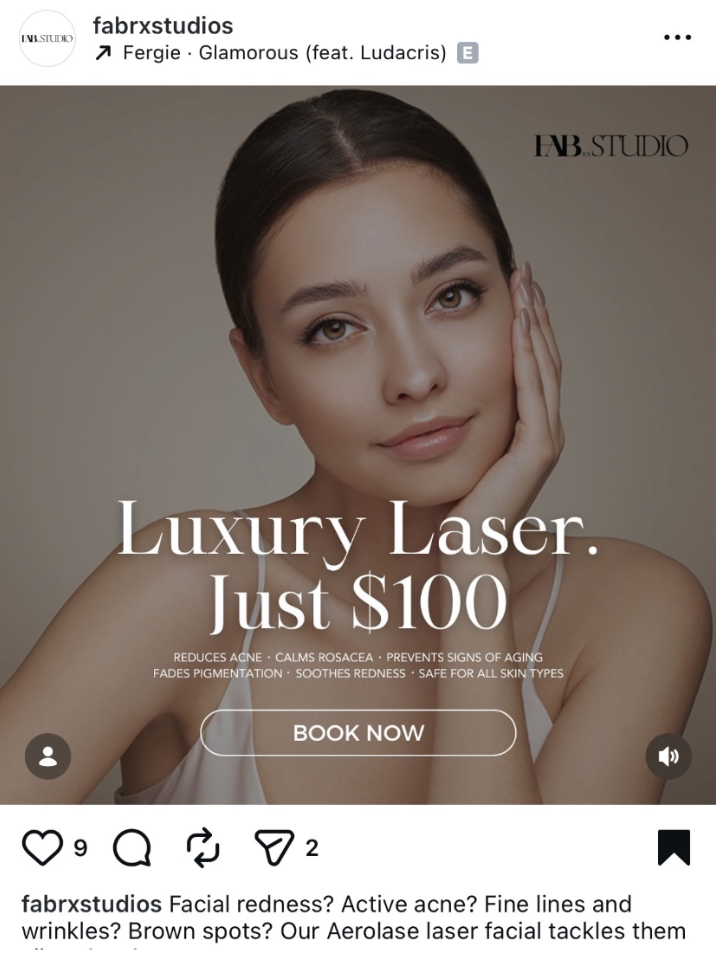
Ah yes, the “luxury” experience – starting at “just $100”. Makes sense. Totally not desperate.
Instead, position yourself as the expert they're lucky to work with:
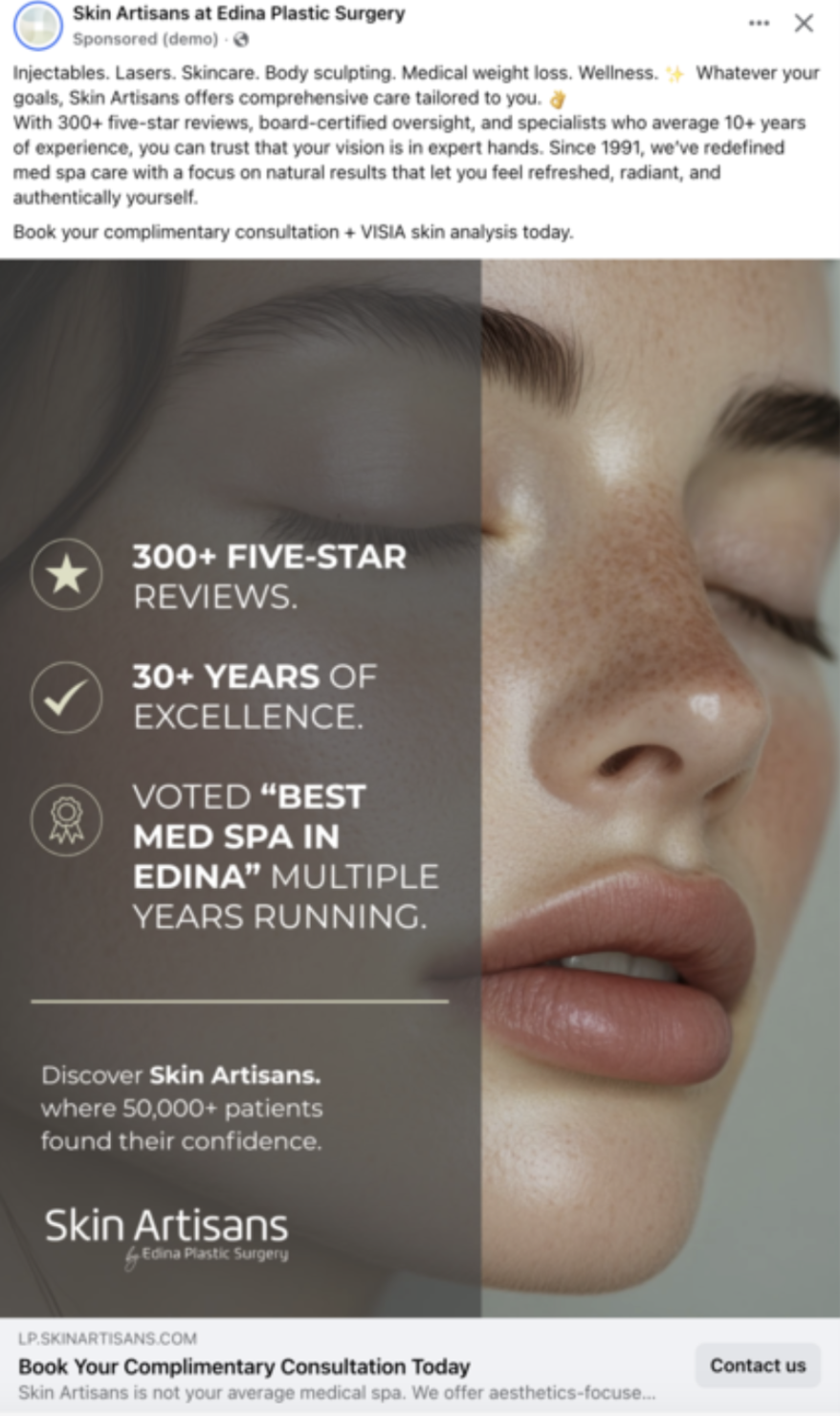
Because you are 💅
The bottom line is: ads can give you oxygen when you need it. They can fill gaps in your schedule and bring in cash flow quickly. But they're not the cure – they're only the relief. Use them to buy yourself time and breathing room while you build the things that actually create sustainable growth.
Which brings us to the next chapter...
Use Your Most Precious Currency - TIME!
When demand slows, practices suddenly regain time – the exact thing they're constantly complaining they don't have when they're busy. And ironically, the moment they get it, it feels more like a curse than a gift.
Here's what you can actually do with it – and no, it's not refreshing your booking software like you're checking your DMs to see if he finally texted back:

1. Fix your foundational weaknesses
You know that clunky booking system? The outdated website? The consultation process that feels rushed? The patient intake forms that look like they were designed in 2003? Now's the time.
These aren't sexy projects, but they're the things that leak revenue and create friction when you're busy. Fix them now, and more of those calls will turn into booked appointments when things pick back up.
2. Spend more time with your patients
When you're not rushing from room to room, you can actually invest in the people who are coming in. Give them an even more personalized experience. Have real conversations. Build relationships. Make their visit so wonderful that referring you becomes automatic. These are the patients who become your best marketing asset – not because you asked them to, but because they genuinely can't stop talking about you after the visit.
Unfortunately, most practices are too stressed to recognize this window for what it is. The panic about not being busy prevents them from using the downtime strategically.
So, don’t be one of them. Take a breath. Use this time wisely. And once you've handled the internal work, it's time to turn your attention to actually getting new people to your doorstep – starting with your digital one.
Get Back Out There!
Look, just like with dating, if your current crush isn't showing you interest, the worst thing you can do is just sit there staring at your phone like a sad rom-com protagonist. You need to get back out there. Update that profile. Swipe right on some new prospects. Get some fresh traffic on your selfies – or in case of aesthetics, your medical website 😉
To achieve that, you need to do three things: strengthen your trust signals, create valuable content, and implement AIO (Artificial Intelligence Optimization):
1. Strengthen Your Trust Signals
Trust is the currency of aesthetic medicine. Between horror stories on Reddit and botched-procedure TikToks patients are more skeptical than ever. If they don't trust you, they won't book – no matter how good your SEO is or how many ads you run.
You need to make trust impossible to ignore on your website. How?
Provider expertise
This isn't just listing your credentials in a boring paragraph nobody reads. It's showing people why you're the right choice.
What's your background? What's your philosophy? What makes your approach different from the injector down the street who's running 30% off specials? Patients want to know who's holding the syringe and why they should trust them with their face. Give them a reason to believe in you:
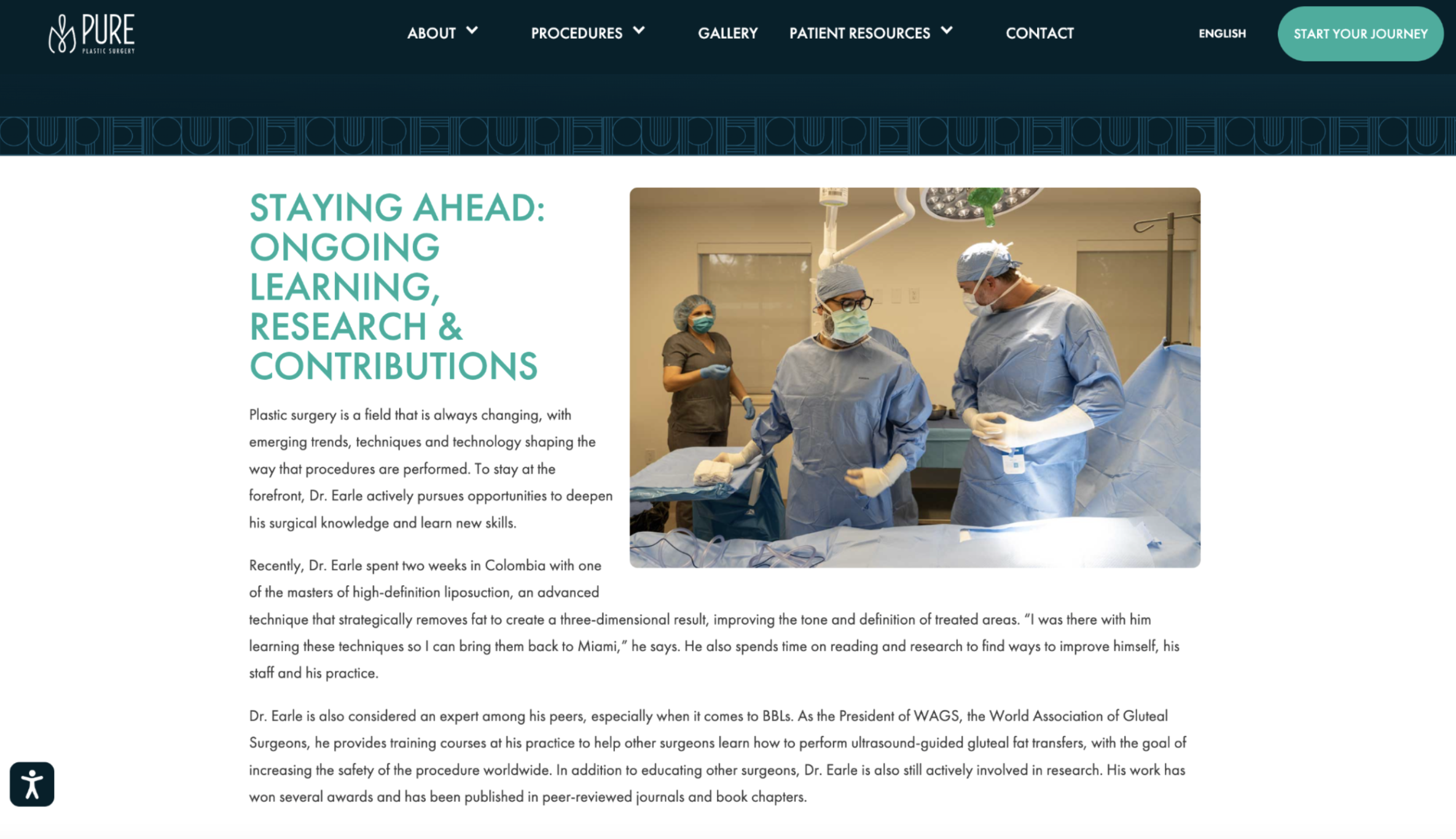
And please, use good-quality, up-to-date photos of yourself – nobody “swipes right” on a stiff headshot from 2014 that looks like a corporate ID badge.
Safety transparency
People are terrified of looking overdone, frozen, or botched. Address it head-on. Talk about your safety protocols. Show your certifications. Explain how you handle complications (because pretending they never happen makes you look naive, not confident).
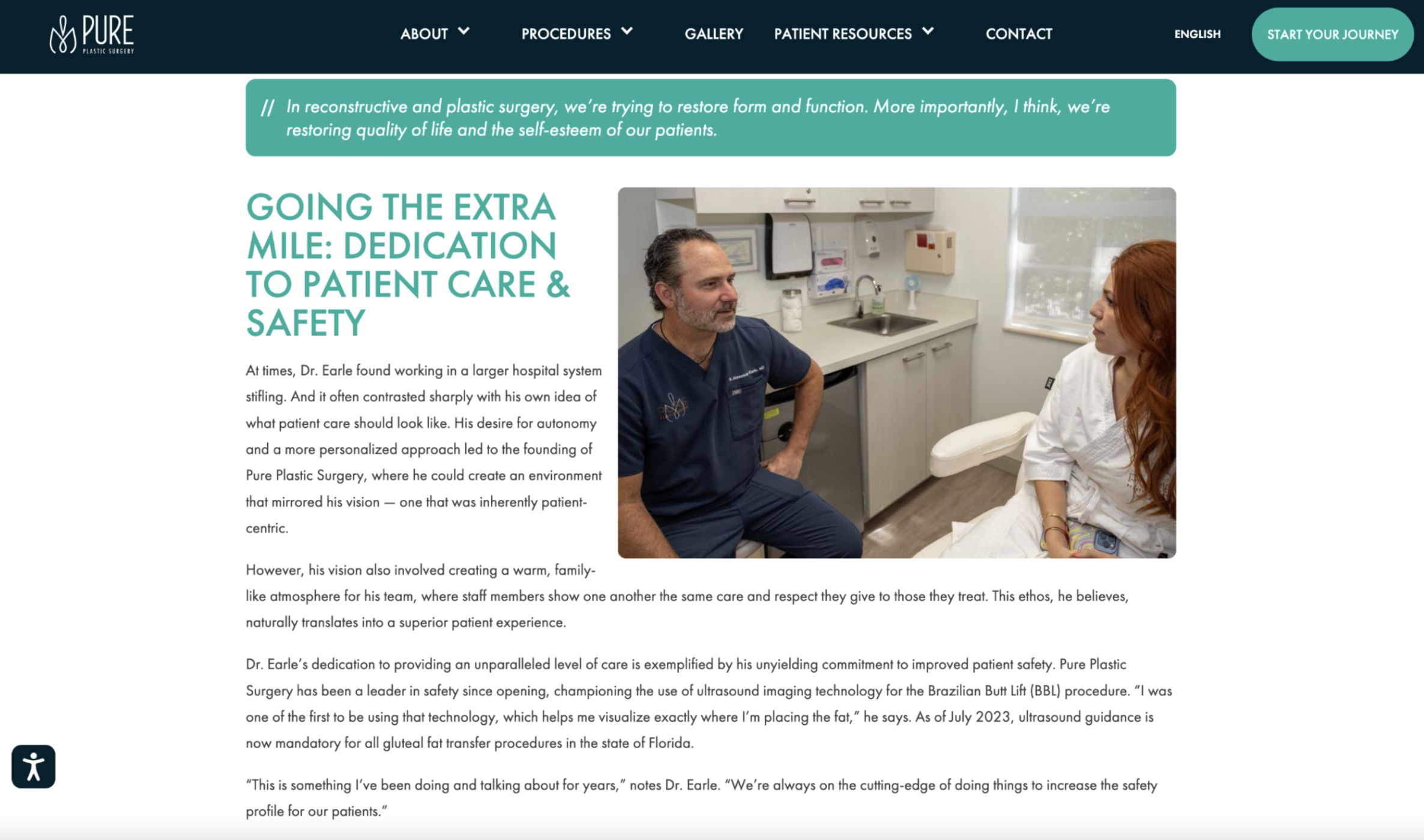
Transparency builds trust faster than any marketing copy ever could.
Patient journeys
Real people who are willing to put their face (literally) behind their experience with you are social proof in its most powerful form:
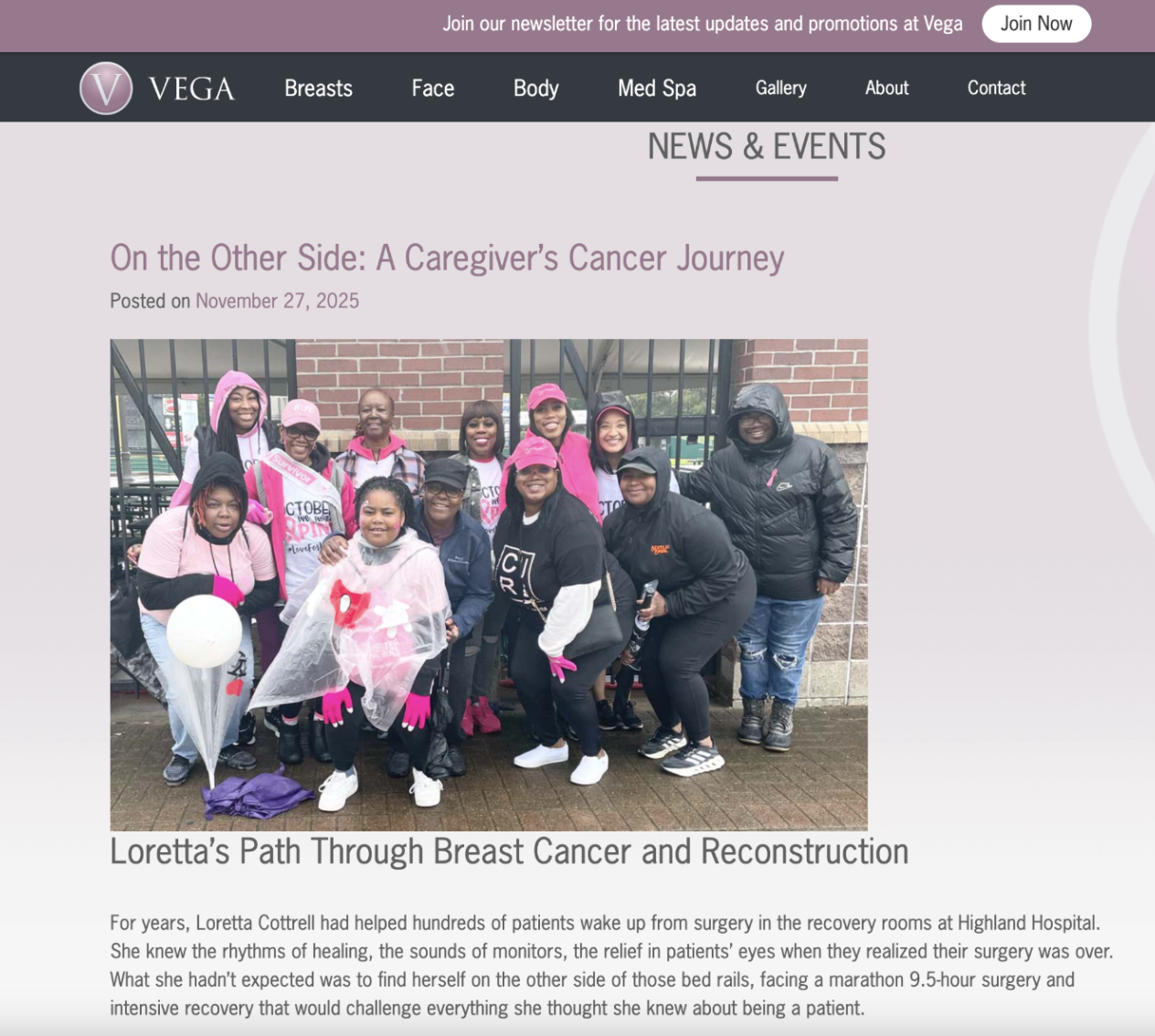
Why did they come to you? What made them finally book after months of thinking about it? How did the recovery actually go – the swelling, the bruising, the moment it started to look right? Did they cry in the car on the way home because they finally felt like themselves again?
When a potential patient sees someone just like them – same fears, same doubts, same hesitation – walk through that experience and come out the other side feeling good, it tells them everything they need to know about whether they can trust you.
P.S. Video content is gold here – it’s way more compelling than text on a page.
2. Create Valuable Content
But what does “valuable” content really mean in today’s digital landscape? It’s all about solving the 3 modern problems of content:
The Problem of Trust
As we've already talked about, modern patients are extremely skeptical – and honestly, can you blame them? They've seen the overpromising ads. The suspiciously perfect before-and-afters. The five-star reviews that somehow all sound like they were written by the same person.
Trust is the problem. Content can be the solution. But only if you do it right.
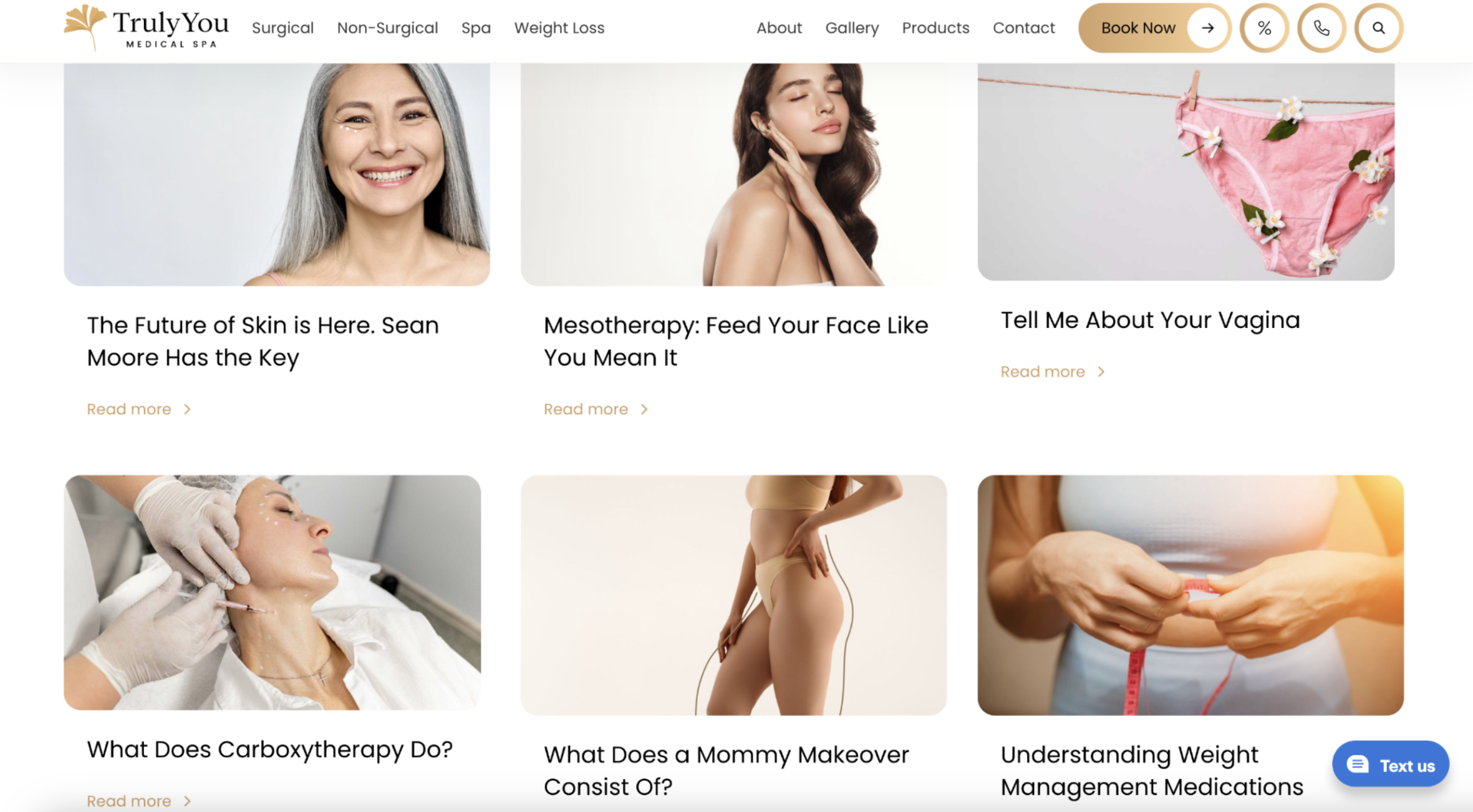
So how do you actually use content to earn trust in an environment where everyone's guard is up? You stop trying to sell and start trying to genuinely help. Some examples of content that actually does that (beyond the patient journeys we already covered) include:
- Content that explains procedures honestly – including the risks, the recovery, and what realistic results actually look like:
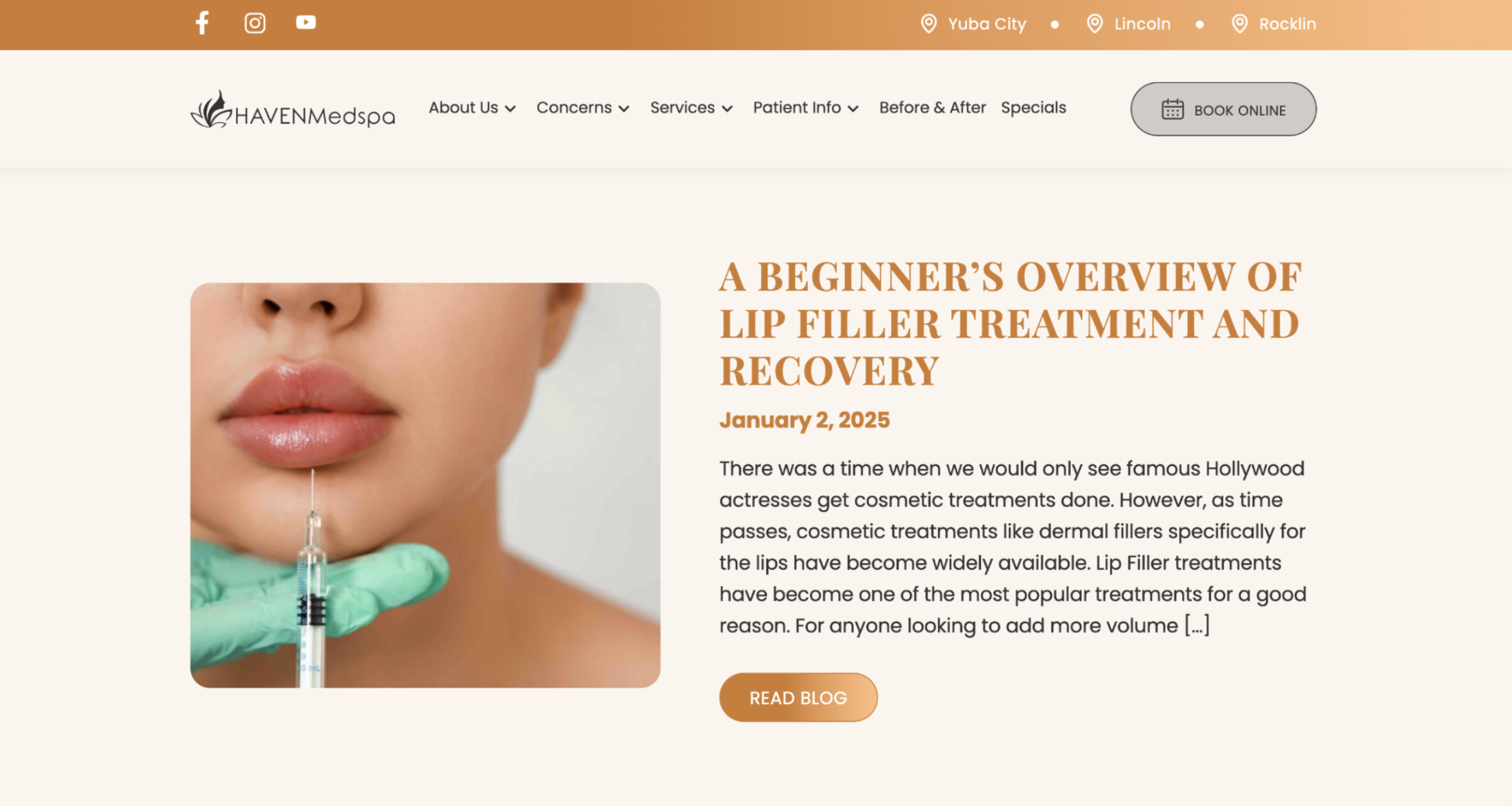
- In-depth blog articles that answer the real questions patients are too nervous to ask in a consultation:
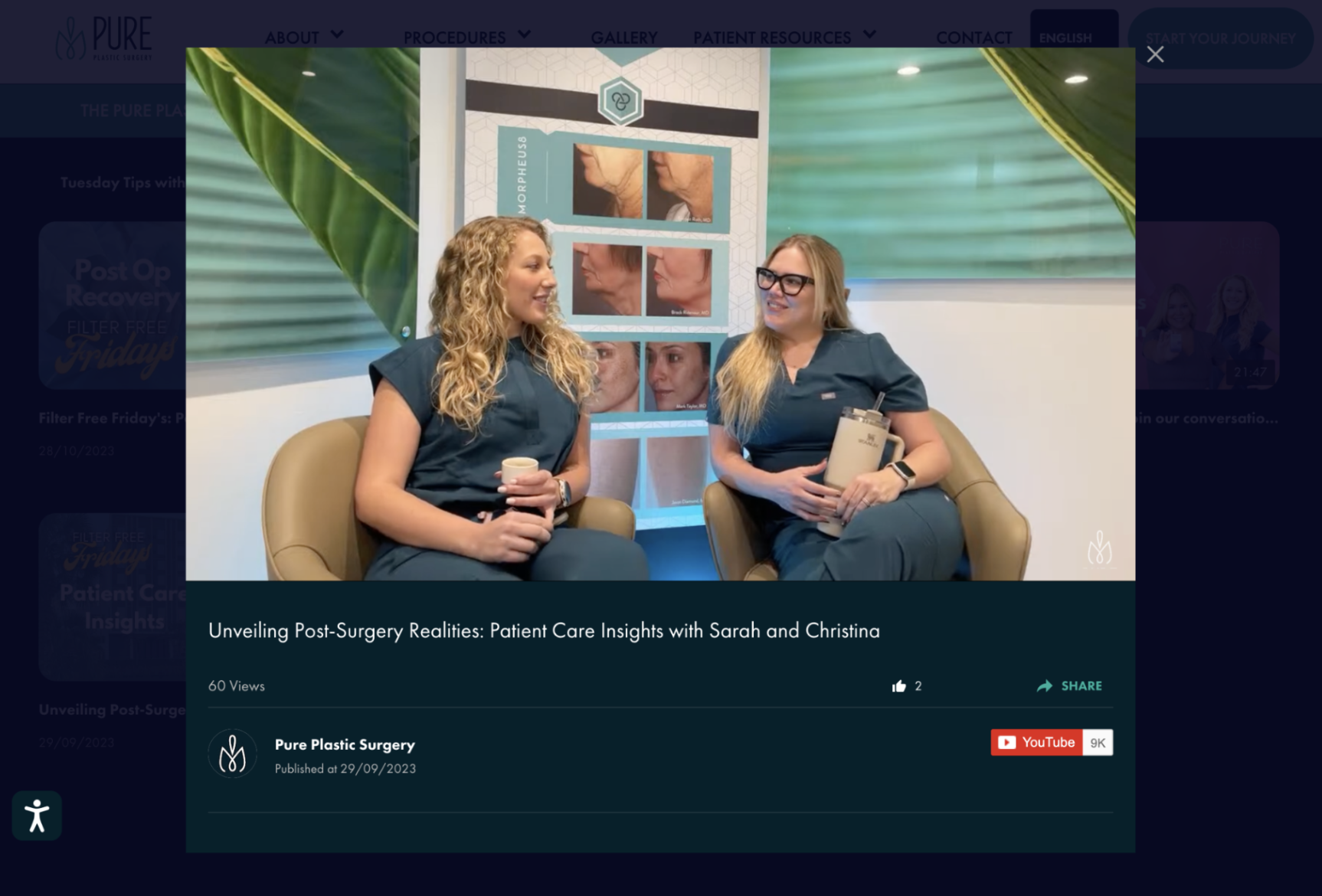
- Behind-the-scenes content that walks a potential patient through the actual process they may soon be going through – introducing your team, showing your safety protocols, and reminding them that there's a real, qualified human being on the other side of that needle:
The Problem of Authenticity
The more tools we have to make things look perfect, the less people trust perfection. Patients have developed an almost sixth sense for content that's been filtered and staged.
What stops the scroll? Real. Actual real.
Content that builds authenticity can look like this:
- Emotionally-resonant, unedited patient testimonials – filmed on a phone, in the treatment room, in the moment. Dare I say, almost “ugly” compared to the polished content we see so much nowadays?
- Original thinking rooted in real clinical experience – not recycled advice, not AI-generated takes. A perspective only you could have, because only you have lived it.
- Provider-led content where the clinician shares their point of view. Think: a video explaining why you stopped offering a treatment everyone else is still pushing or why you turned away a patient who wanted something you didn't think was right for them.
The Problem of Attention
Here's the uncomfortable truth: even if your content is trustworthy and authentic, none of it matters if nobody stops to look at it.
U.S. adults now spend over 12 hours a day consuming media – 4 hours of TV, 6 to 7 hours of internet, and that's before you factor in billboards, radio, and everything else hitting their senses in between. We're talking 50 to 100 GB of information every single day. Per person. Every day.
You have about two seconds – maybe less – to make someone pause.
The first frame of your video, the first line of your caption, the first thing someone sees when they land on your profile – all of it needs to earn the next second of their attention before you've earned the right to say anything else.
Content that captures attention can look like this:
- Hooks that speak directly to a specific fear, desire, or question your ideal patient already has:
- Video content that gets to the point immediately:
…And now that you know how to create content that’s valuable for your patients, you need to make sure they actually see it:
3. Implement AIO (Artificial Intelligence Optimization)
You've heard of SEO. Meet its evolution.
AIO (Artificial Intelligence Optimization) is the new paradigm of digital discoverability, and if you're not thinking about it yet, you're already behind.
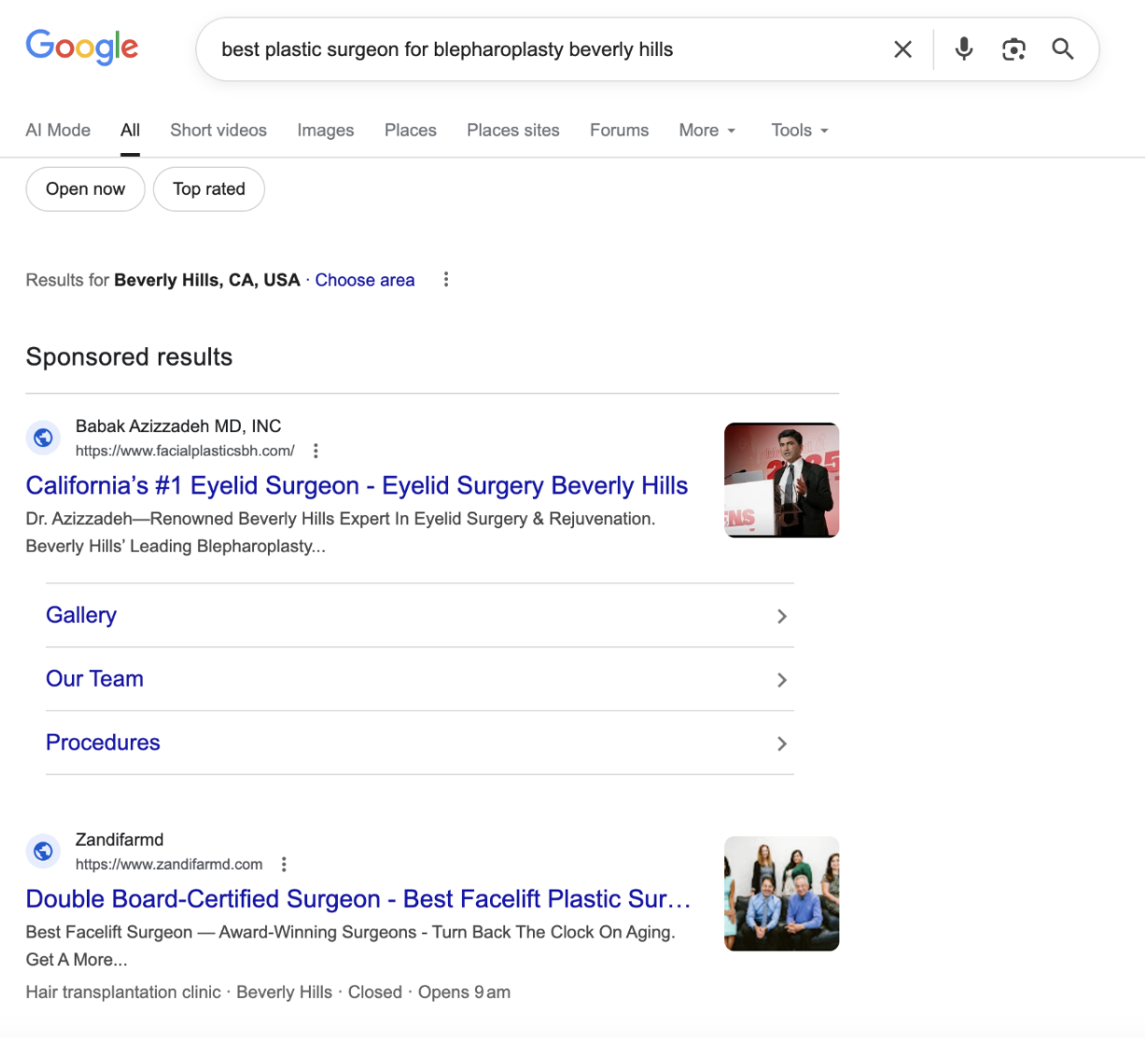
Because something fundamental has shifted in the way patients find their providers – and it happened faster than most practices noticed. Patients are no longer typing keywords into Google and scrolling through pages of results:
They're asking AI assistants – like ChatGPT – and they're expecting a direct, trustworthy answer. Not ten blue links. An answer:
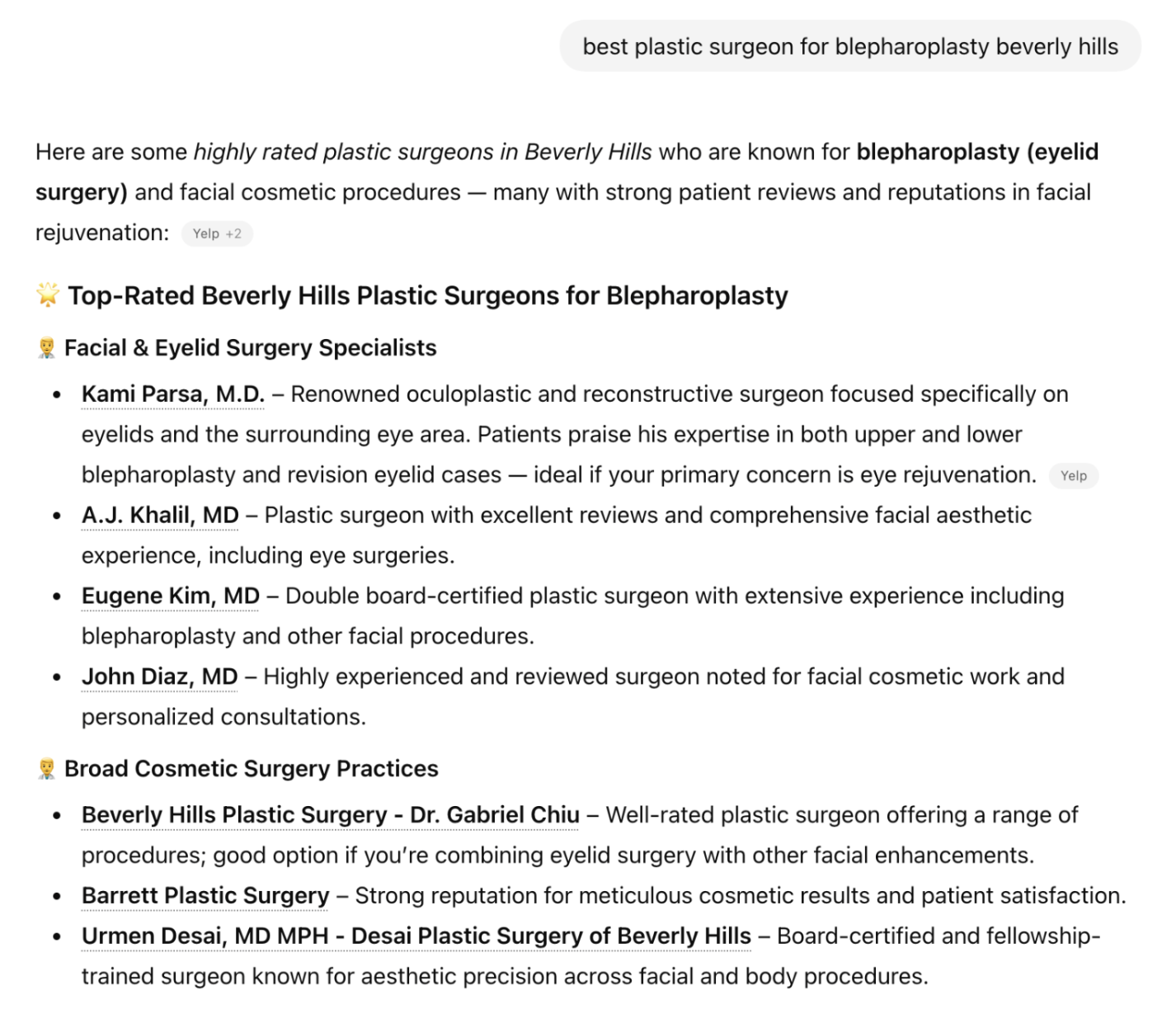
AIO is about making sure that answer is YOU.
How to achieve that?
If I were you, I’d consider consulting an expert – or hiring an agency. This space moves fast, and unless you’re already very AI-savvy, it’s hard to keep up and execute it in a way that actually delivers results.
After all, as we’ve discussed, marketing is an investment. And even if money is tight, it’s one of the few things that can actually help you multiply it. So what does AIO actually entail?
Structured Data
If you have no idea what structured data is, I’m ironically probably the best person to explain it – because, trust me, neither of us are exactly IT wizards. I’ve never been great with computers or tech stuff, and I’m guessing you didn’t go to med school to debug code either.
Think of it like this: AI systems don’t actually “see” a website the way we do. They don’t just take out their own phone or laptop, look at text, images, or design and interpret it like you do. To an AI, a web page is basically a long string of code – a mix of words, numbers, and formatting.
That’s where structured data – medical schema markup – comes in:
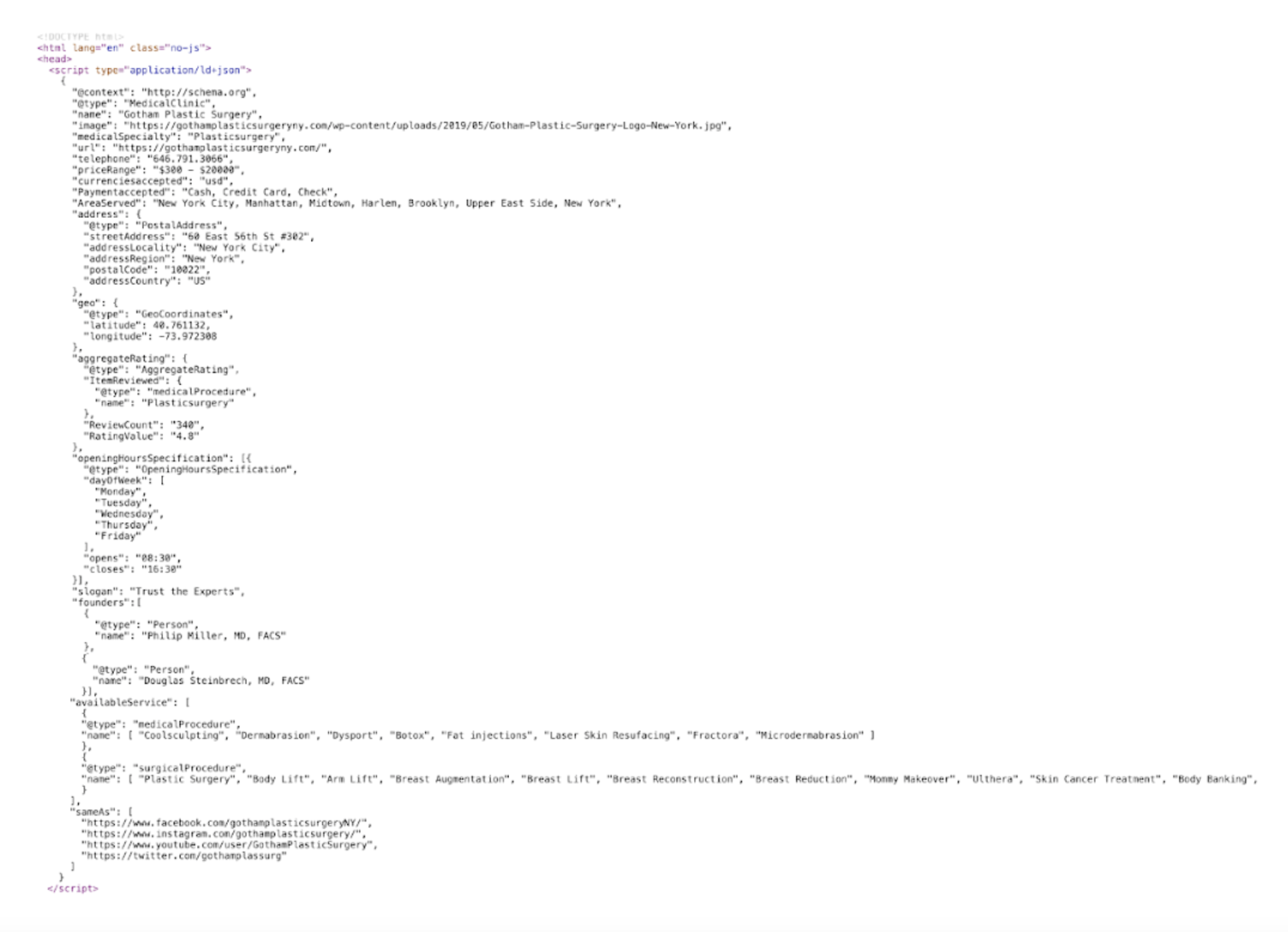
Schema markup is a piece of code added to your website that helps search engines and AI systems categorize and interpret your information correctly. You can access it by pressing Option + Command + U, or by right-clicking and selecting 'View Page Source.' Think of it as a bunch of metadata that sits behind your content and clearly labels what everything is.
By adding schema (like Organization, Person, FAQ, LocalBusiness, etc.) to your site, you explicitly label key facts about your practice so AI can interpret and cite your content accurately. All of these categories answer the most important questions for both AI models and potential patients:
- Who are you?
- What do you do?
- Where do you do it?
- Why do people trust you?
So when an AI is deciding which website to show to someone asking "Who's the best plastic surgeon near me?", it's going to pick the result that answers that question – and the one it can actually understand.
Genuine authority
In the SEO world, authority has traditionally worked a bit like a popularity contest. The more high-quality backlinks pointing to your website, the more likely your pages are to rank highly in search results.
AIO, on the other hand, changes the equation. Backlinks still matter, but AI systems are looking far beyond simple link volume. They evaluate credibility, consistency, and demonstrated expertise to determine whether your practice is trustworthy enough to cite as an answer.
For AI to confidently cite your practice as the answer, it needs signals that you’re genuinely knowledgeable and reliable:
- Clear authorship and credentials
- Original insights and thought leadership, not recycled content
- Consistent, trustworthy information across your whole digital presence
The question AI is really asking when it crawls your content is simple: “If I point someone here, will they actually get a correct, helpful answer?”
This matters because AI-generated answers don't work like search rankings.
A search engine can list you at position four and still drive traffic. An AI that isn't confident in your content just won't mention you at all. There's no consolation slot. It either trusts you enough to put your name behind its answer, or it finds someone it does trust and uses them instead.
Conversational content
The way patients search using Artificial Intelligence is very different compared to when they’re using traditional search engines. They're not just typing keywords – they're talking to AI like it's their friend:
"Hey ChatGPT, how young is too young to start Botox?"
"Hey ChatGPT, if I get filler once do I have to keep getting it forever?"
"Hey ChatGPT, what's actually the difference between Botox and filler? Are they even the same thing?"
And because that's exactly how people use AI, this is what AI is trained on – real human conversation. Therefore, it naturally gravitates toward content that sounds the same way: like a real expert who's genuinely trying to help, not a page that was written to rank.
It means that if your website reads like a clinical brochure – formal, stiff, full of language nobody actually uses when they're nervous about a procedure – AI simply won't pull from it. Not because your expertise isn't there, but because your content doesn't sound like the question that was just asked.
That's the shift.
Writing for AI isn't about optimization in the traditional sense. It's about sounding like the person your patients are already looking for – someone who gets it, explains things plainly, and doesn't make them feel stupid for asking.
Reignite Old Flames
Imagine you met someone at a party and exchanged numbers. They showed interest, maybe even looked you up on social media later – but neither of you ever actually followed up. The interest was there, but no one took the next step.
…And sometimes all it takes is one simple “yes” for something meaningful to start 😉
That “yes” is the power of 1%. And in the context of your practice, it might be the most underrated opportunity you have right now.
Consider this: many practice websites convert only a small percentage of visitors into consultations. That means the majority of people who are already curious about your services leave without taking the next step. Even a tiny improvement in that conversion rate can have a significant financial impact.
Just think about the math.
If your website conversion rate increases by just 1%, that seemingly small change can translate into a substantial amount of additional revenue – especially in aesthetic medicine, where the value of a single patient can be very high. One surgical case or treatment plan can represent thousands of dollars:
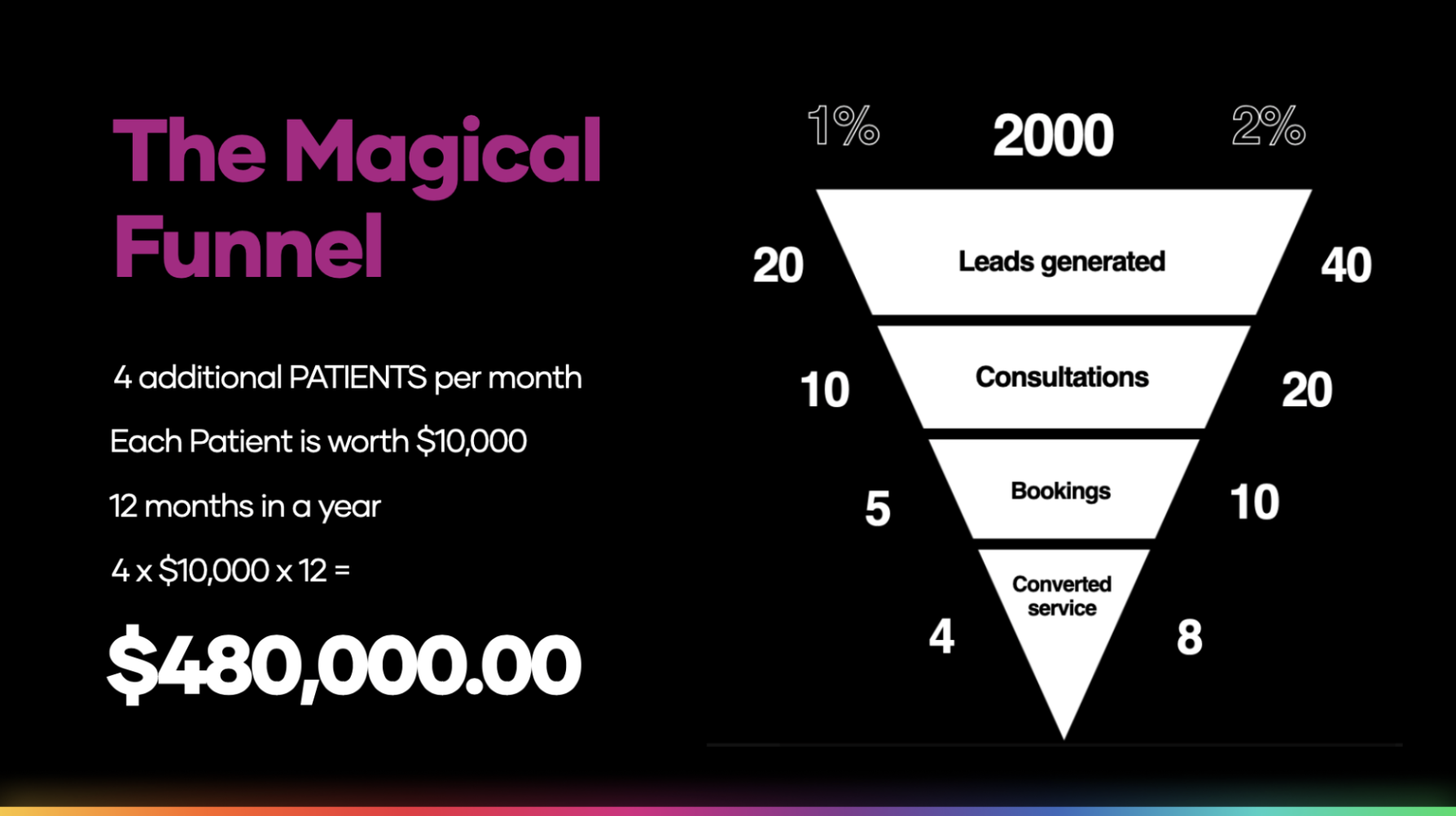
Multiply that by several additional patients per month, and the impact becomes obvious. That is why 1% is such a powerful number in this context.
(Note: the above figures reflect the lifetime value of a non-surgical patient or the per-patient value of a surgical candidate – your actual numbers may vary.)
So, instead of focusing only on getting more visitors, reignite the old flames and focus on making sure the visitors you already have are far more likely to convert. How? Let’s break it down together:
1. Strengthen Your CTAs
Even when patients are interested, many websites fail to clearly guide them toward the next step.
That’s why good Calls-to-action (CTAs) are the foundation of any well-converting website. They should be obvious, impossible to miss, and easy to act on. Instead of passive language like “Learn More,” use clear next steps such as:
- Schedule a Consultation
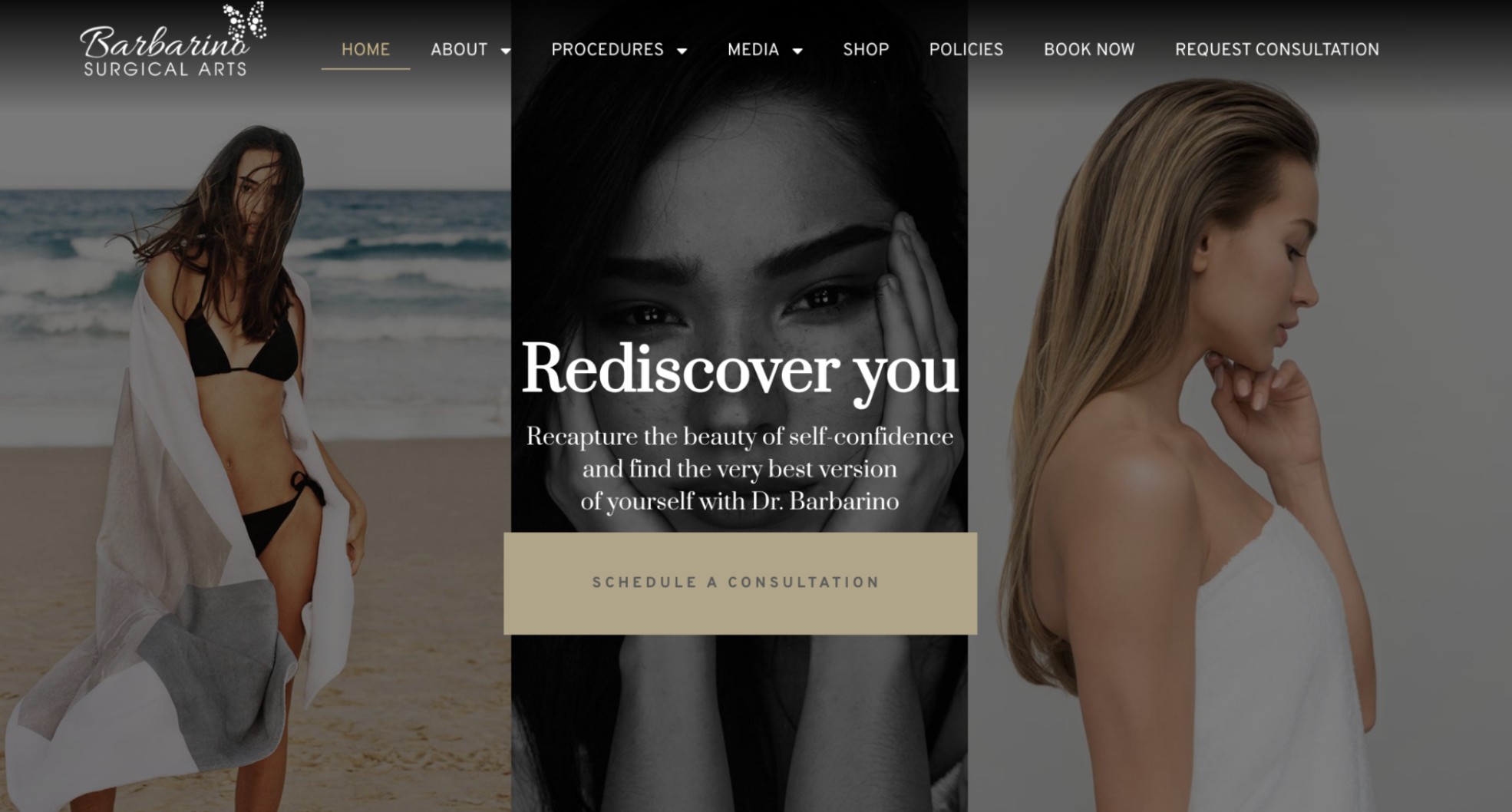
- Book Now
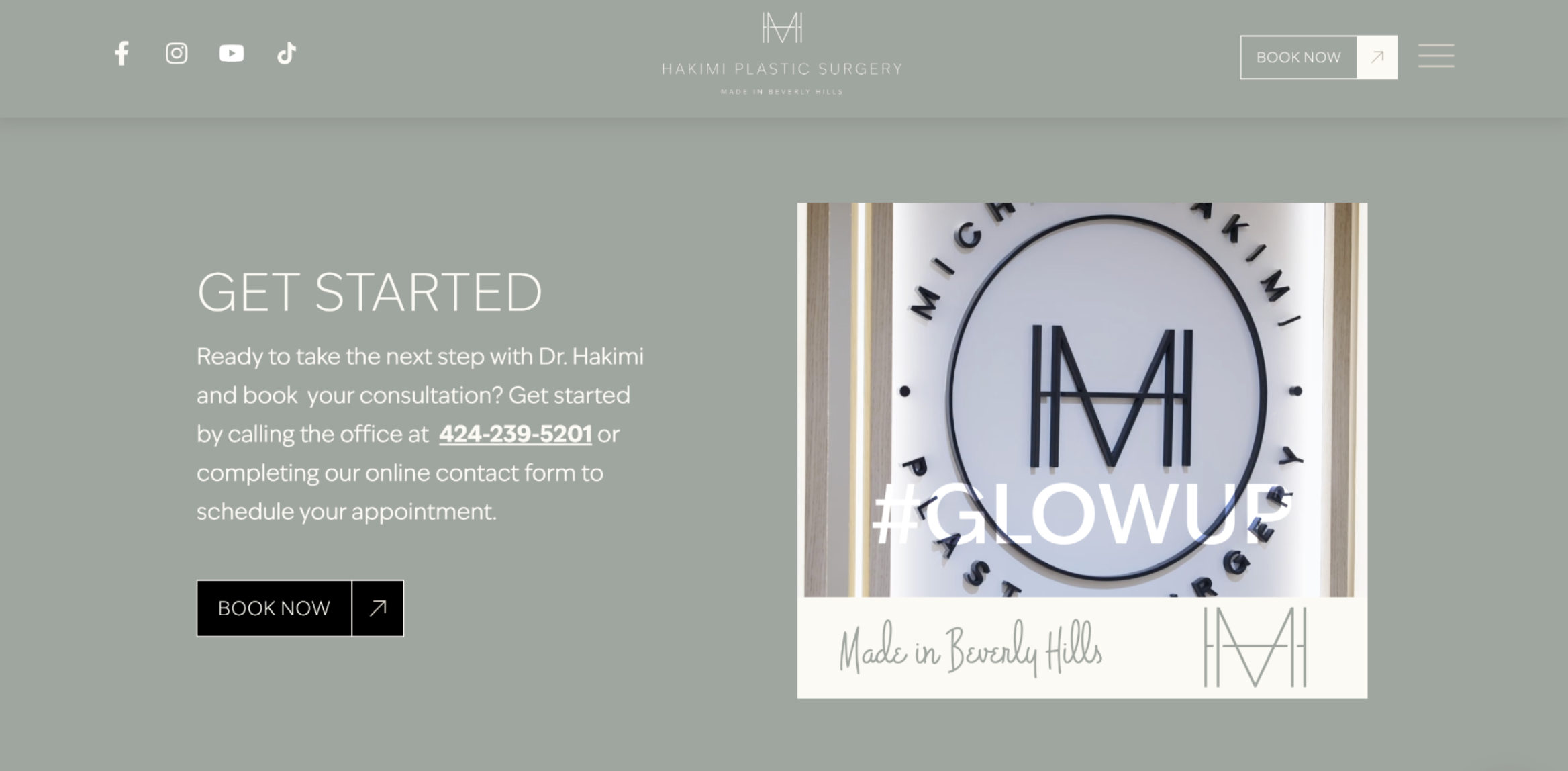
- Schedule Today
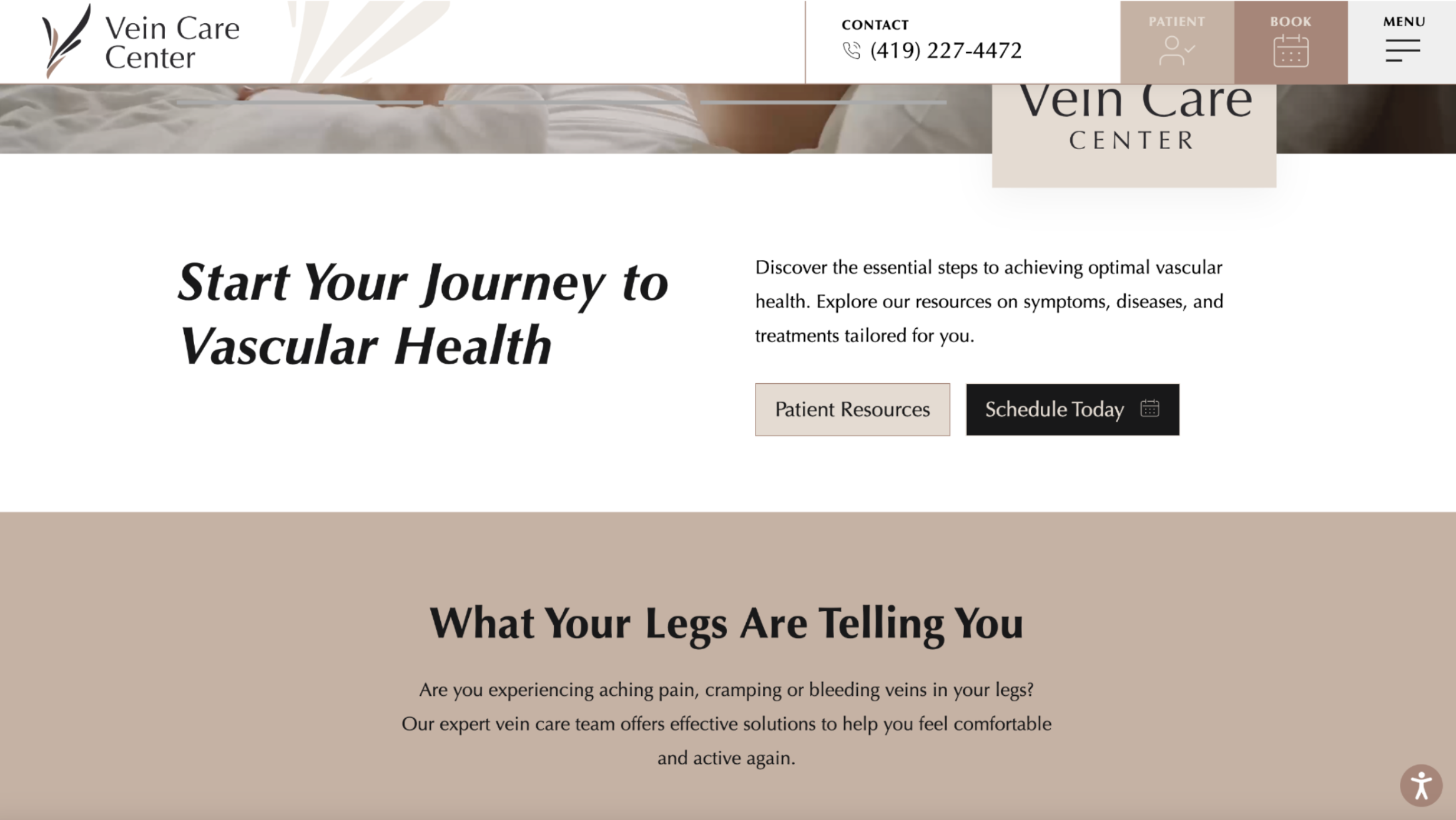
(For other examples of good CTAs head to our article on IM+)
The CTA isn't just a button.
It's the moment where interest either converts or disappears. Make sure it shows up at the top of the page, mid-scroll, and at the bottom – because different patients are ready at different points, and you want to be there when they are.
2. Use Smart Automation
Not every visitor is ready to call the moment they land on your page. Some are still weighing their options. Some have a quick question they want answered before they commit to anything.
That's exactly where automation bridges the gap:
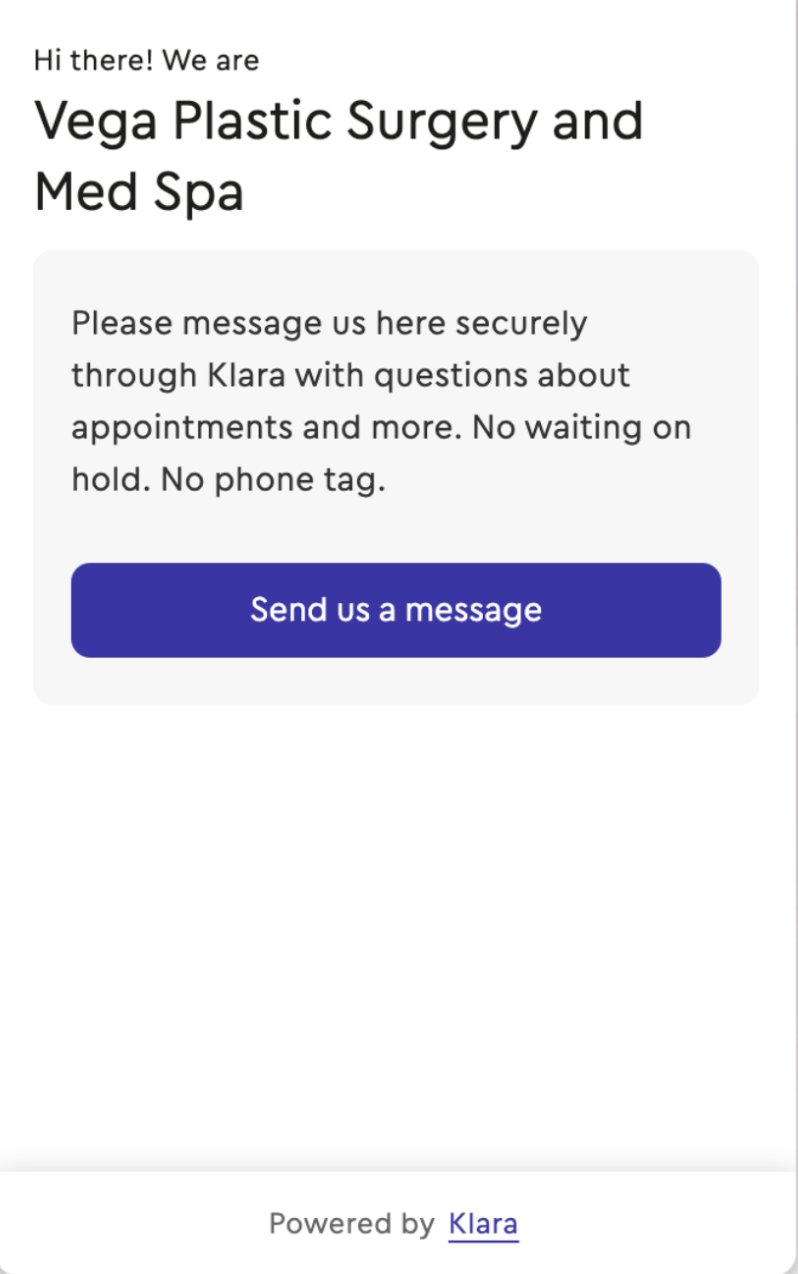
Tools like AI chatbots and automated messaging systems can handle the questions that might otherwise go unanswered – and an unanswered question doesn't just send a potential patient to a competitor. It can kill the momentum entirely. The patient closes the tab, loses interest, and never comes back. Questions like:
- Pricing ranges
- Recovery time
- Whether a procedure is right for their concern
- Appointment availability
After all, many patients don’t want to fill out a contact form and wait – if they don't get an answer when they're curious, the moment passes.
(Want some examples of AI tools and programs you can start using today? Check out our article about leveraging AI in practice management)
And while good automation doesn't replace the human side of your practice, it makes sure no one slips through the cracks at 11pm on a Tuesday because nobody was available to answer a simple question. Most patients who reach out are already interested, they just need a nudge. The right information, at the right moment, is sometimes all it takes. The goal is to be there for that moment without adding work to your team's plate.
3. Getting Patients to the Grandma’s House
All in all, converting a patient is like – as Sam says – getting them to the grandma’s house.
The road to get there is dark and full of distractions. At any point, something can pull them away, confuse them, or make them drop off entirely. Your job is to make sure they get there no matter what.
So the moment someone lands on your website, it needs to answer four questions within seconds. These are the guiding hand that walks a potential patient from curious stranger all the way to booked appointment:
- Who are you?
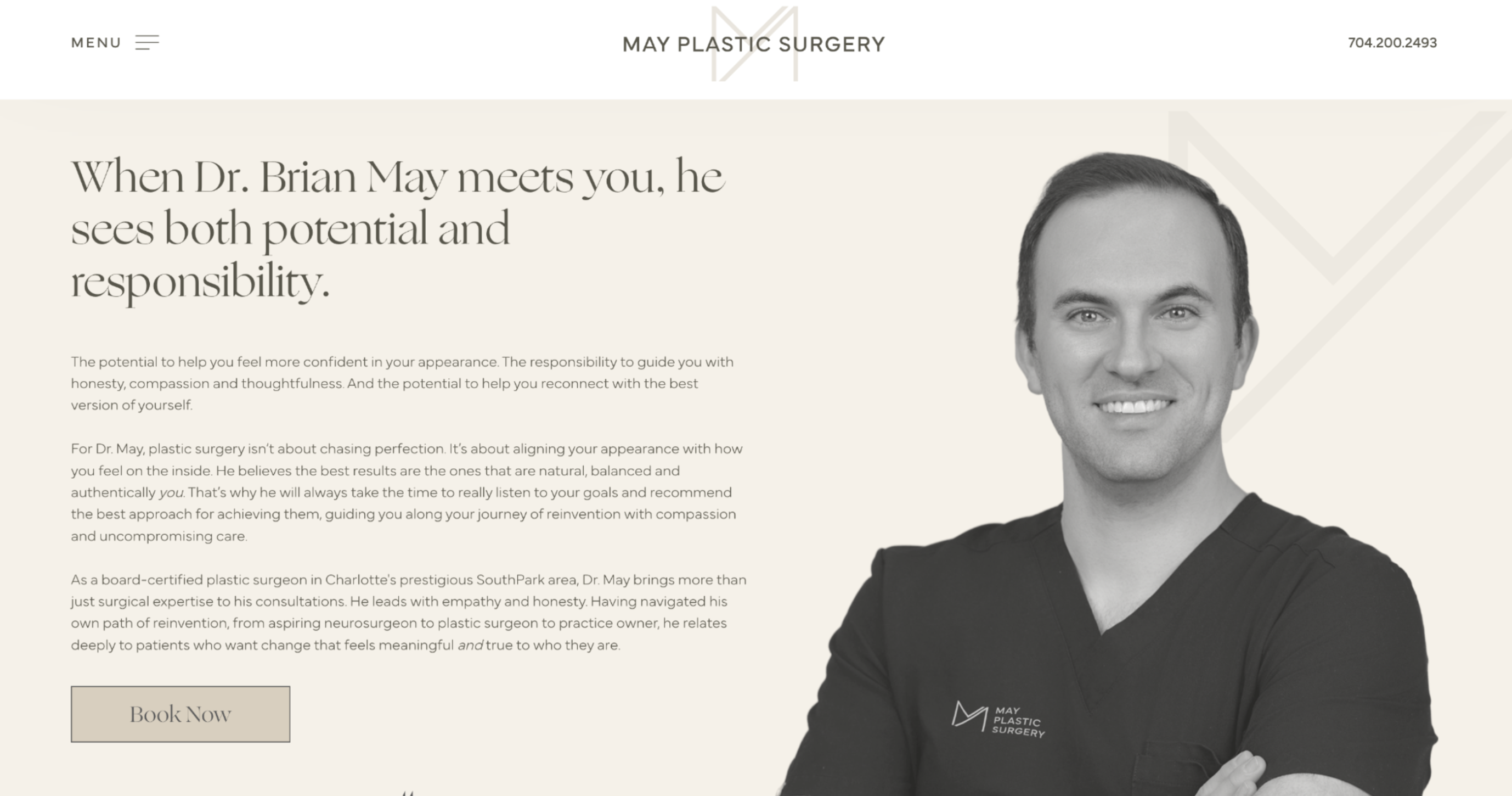
The about page is consistently one of the most visited pages on any practice website – because before someone lets you touch their face, they want to know who you are.
Use it. Introduce yourself like a real person, talk about your background, your approach, why you do what you do. Make them feel like they already know you a little before they've even booked.
- What do you do?
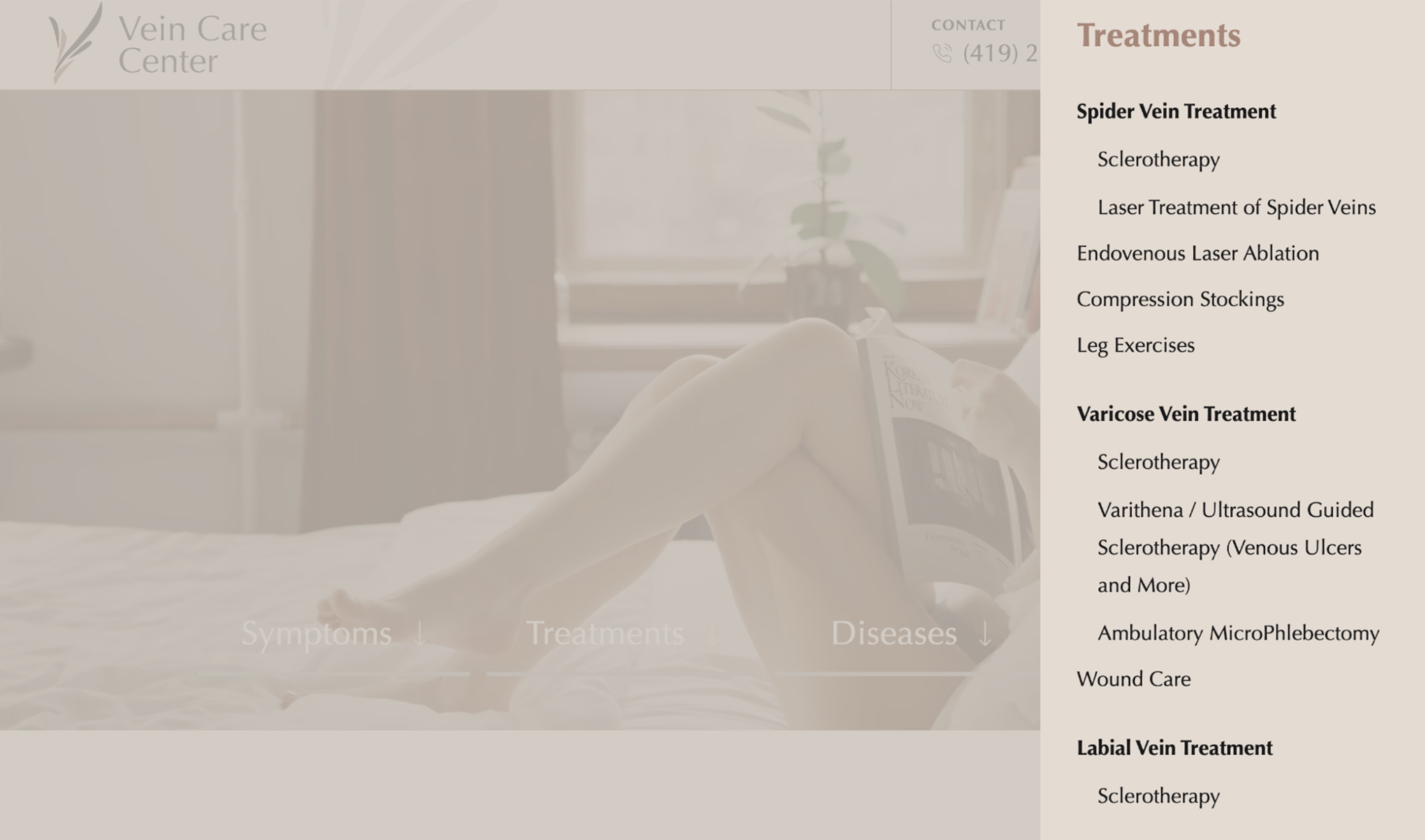
Sounds obvious, but you'd be surprised how many medical websites make this genuinely unclear.
Are you a plastic surgeon or a med spa? Do you do surgical procedures, non-surgical treatments, or both? This is where your procedure pages do the heavy lifting – detailed, well-written, specific enough that a patient can read them and think "yes, this is exactly what I'm looking for":
- Can you help me?
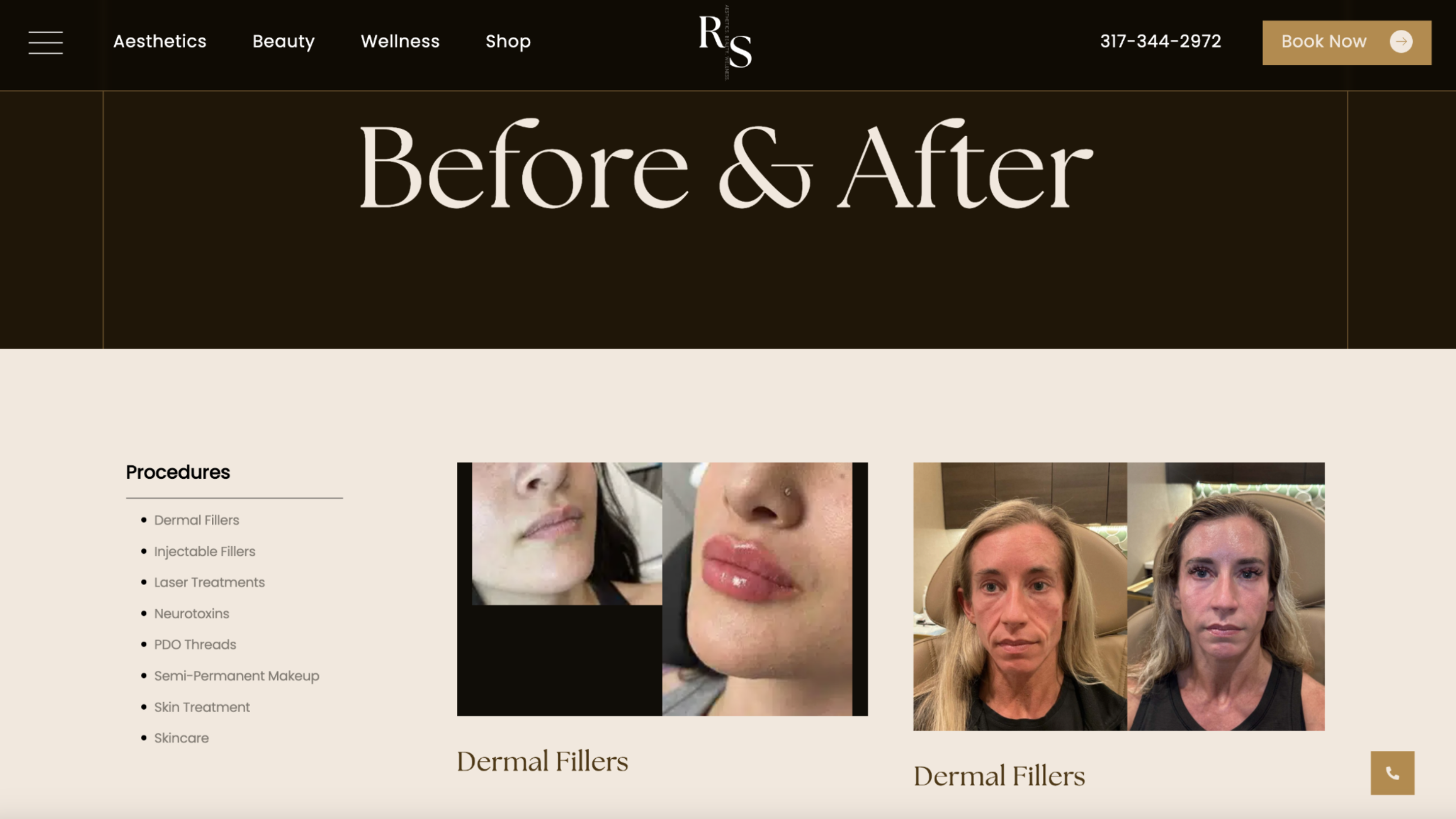
This is where before and after content becomes your most powerful sales tool.
A potential patient is looking for someone who started where they are and ended up where they want to be. The same skin tone. The same concern. The same starting point. That's why a strong b&a gallery is the closest thing to a guarantee you can offer before someone ever walks through your door. The more specific, varied, and representative your cases are, the easier it becomes for a patient to see themselves in your work:
- Can I trust you?
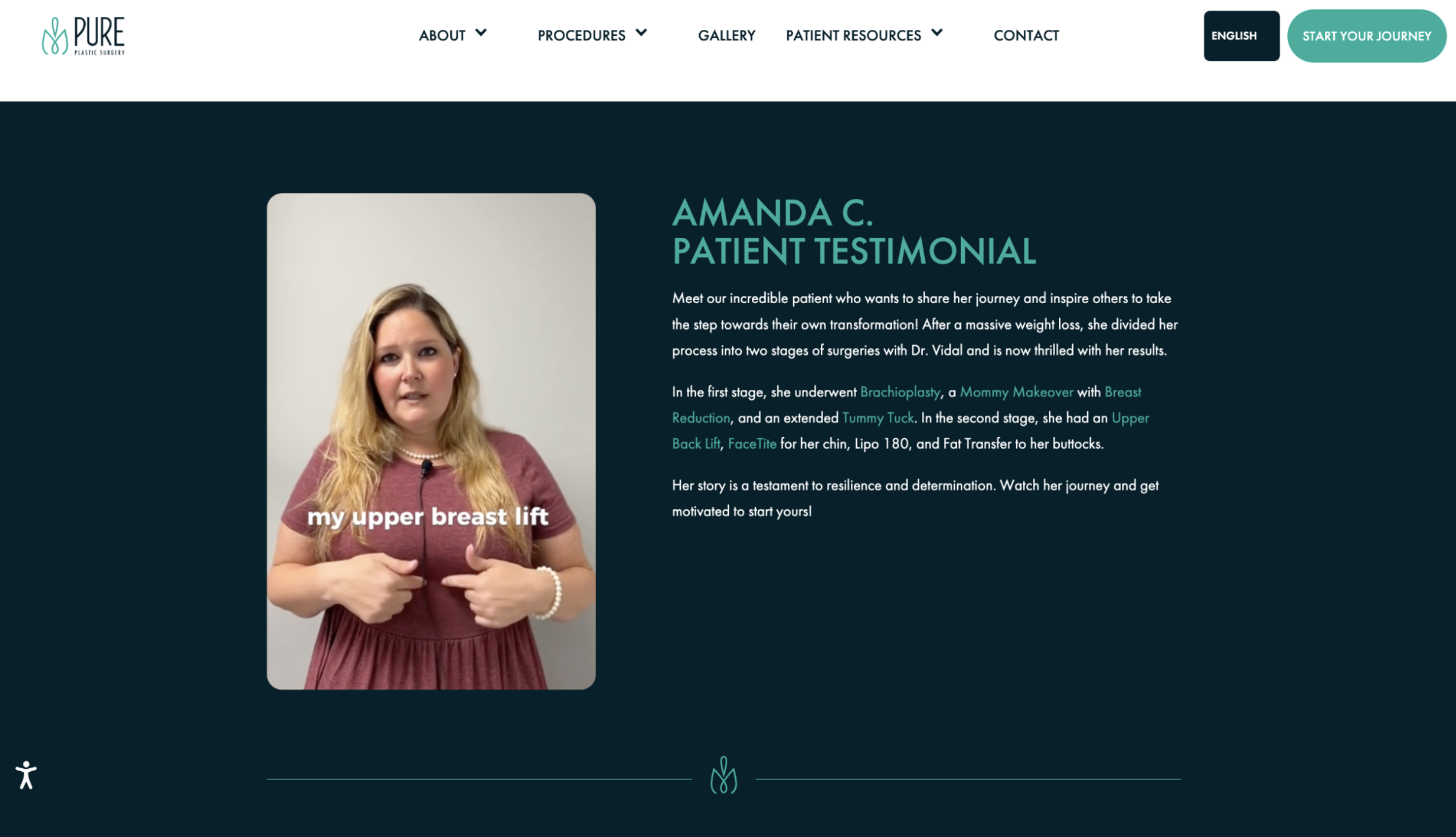
Think about the last time you bought something online. You didn't just read the product description – you went straight for the reviews, the photos, the "real people" content. You wanted to see it worked for someone else before you committed. You were looking for social proof.
Your patients are doing exactly the same thing – and that's exactly why patient testimonials (especially video!) and reviews prominently displayed on your site are so important:
Reinvent Yourself!
…And I don't mean in a desperate way, like cutting bangs at 2 AM because you're having an existential crisis after he didn't text you back.
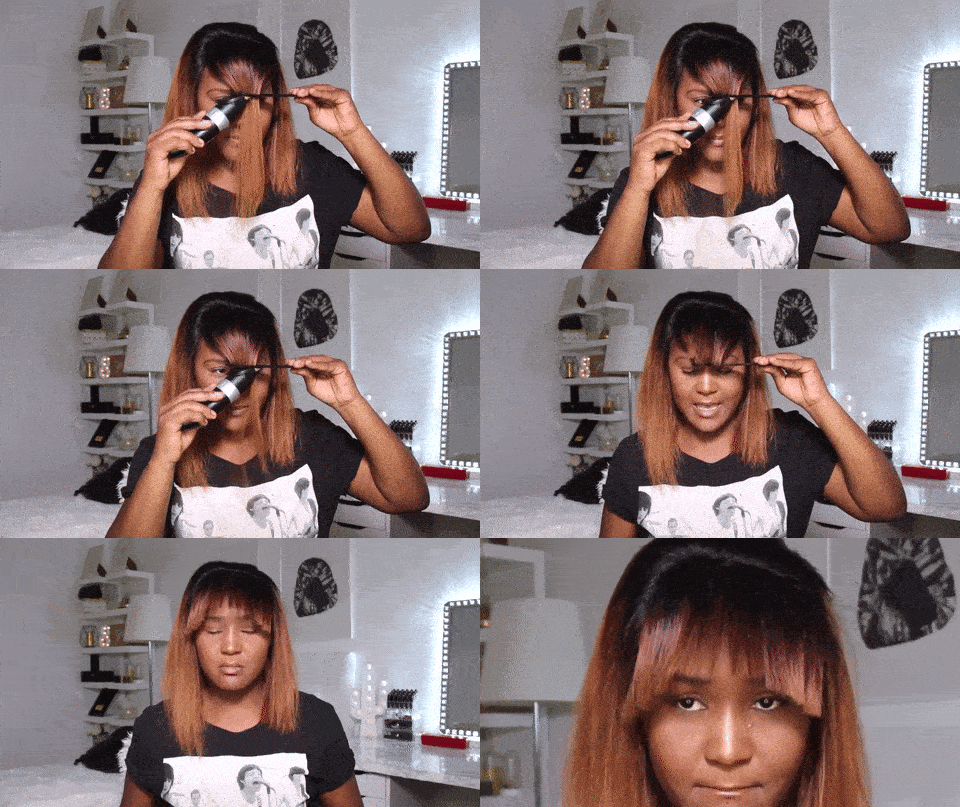
I mean in a smart, strategic, "protect your business from market fluctuations" kind of way.
Because here's the thing a lot of practices don't realize until it's way too late: they're basically putting all their eggs in one basket – usually surgical procedures. And sure, when those high-ticket surgeries are rolling in, everything feels great. But the second demand dips – whether it's the economy being weird, seasonal slowdowns, or just the market doing its thing – suddenly it all feels like you built your entire emotional stability around one person… and they just said "we need to talk." 😅
That's why you need multiple revenue streams. Not because it's some trendy business buzzword, but because it literally can be the difference between surviving a slow month and spiraling into panic mode.
Think of it like this: you don't buy an umbrella when it's already raining. You buy it so that when it does, you're not standing outside soaking wet wondering why you didn't think ahead. Diversification is that umbrella.
What does that actually look like for an aesthetic practice?
1. Skincare
There are two ways to approach this.
The first and easiest is becoming a stockist for an established medical-grade brand – think SkinCeuticals, Obagi, or similar. You purchase their products at wholesale price and sell them at retail in your clinic, keeping the margin. No formulation, no branding headaches, no minimum order nightmares – just a straightforward retail model.
The second route is white-labeling, where a manufacturer creates a product and you put your own branding on it. This is more involved and more expensive upfront, but it builds your brand long-term.
For most practices starting out, stockist is the smarter first move. Pick one or two brands that align with your treatments, train your team to weave recommendations into every post-treatment conversation, and display products where patients will inevitably see them.
2. Treatment extensions
The trick here is thinking about what your patients are already reaching for between appointments and making it available to them before they even leave your clinic.
A post-care kit is a great example:
You bundle existing products (a gentle cleanser, SPF, a healing balm, whatever's relevant to your most popular treatment) into branded packaging and sell it as your clinic's own aftercare kit. Patients are already asking what to use after their treatment – you're just making it easy for them to buy the answer before they walk out the door.
Other ideas worth exploring:
- collagen supplements,
- at-home LED devices,
- silk pillowcases,
- branded ice globes.
The rule of thumb is: if your patients are asking about it, you should already be selling it.
3. Gift cards
Gift cards and vouchers are essentially pure cash flow – and they cost almost nothing to set up, which makes them the perfect starting point for practices that are already watching their margins.
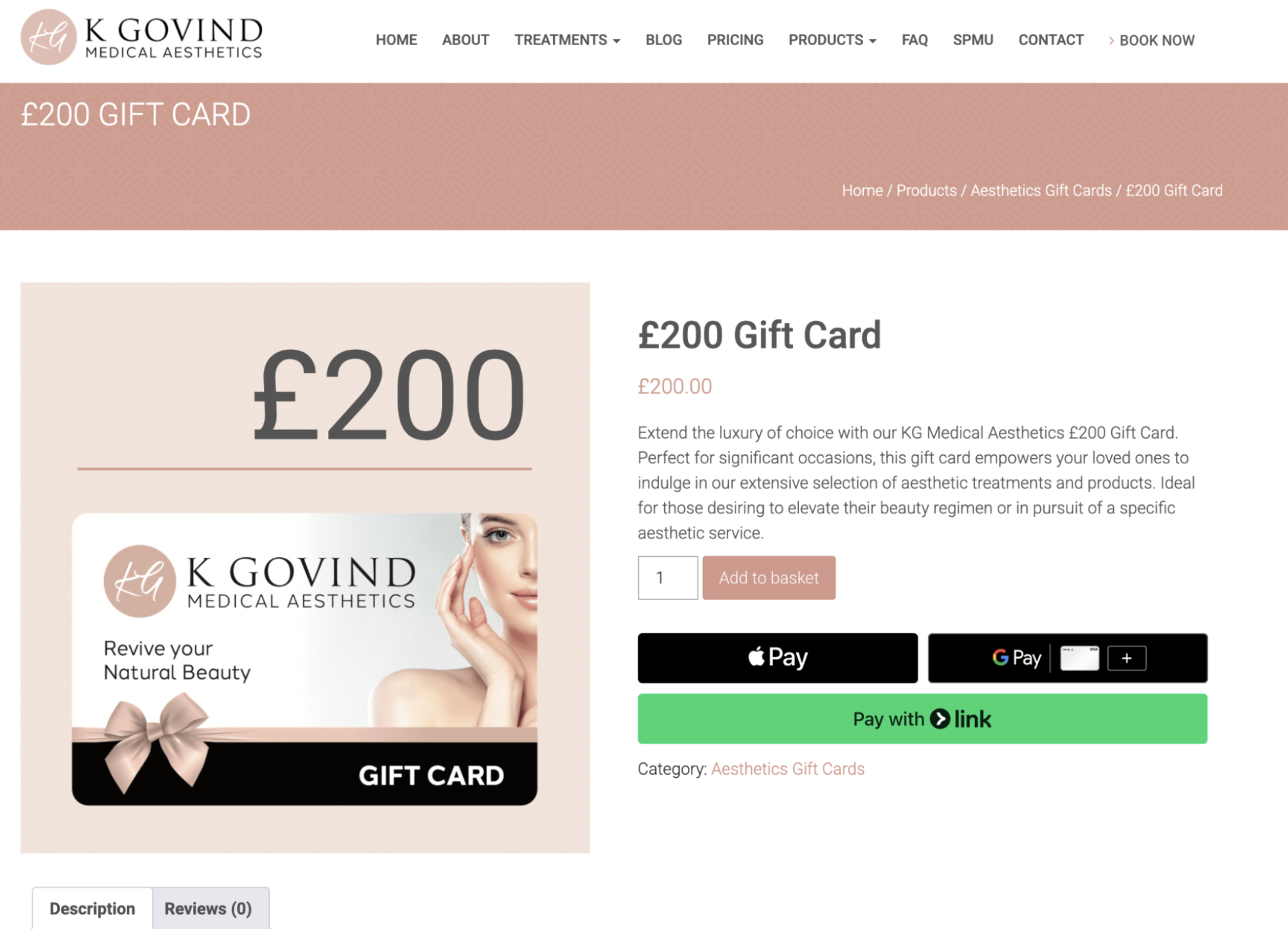
Here's why gift cards actually work: when your loyal patients gift a treatment to someone they love, they become your best marketing channel without you spending a single penny. That new patient walks in already trusting you – because someone they trust recommended you.
The numbers back it up too. A 2023 report by the British Beauty Council found that 42% of clinics offering gift vouchers saw a notable increase in bookings in the six months following their introduction.
And the best part? The money lands in your account before a single appointment is booked. You're not chasing invoices or waiting on treatment plans to convert – you're collecting revenue upfront and delivering the service later.
Add them to your website checkout, train your front desk to mention them at every visit, and build a dedicated push around Mother's Day, Valentine's Day, and the holiday season. A simple campaign around any of these moments can generate serious revenue with minimal effort (and cost).
4. Packages
When the market slows down packages are one of the most effective tools you have – both for protecting your revenue and keeping your appointment book full.

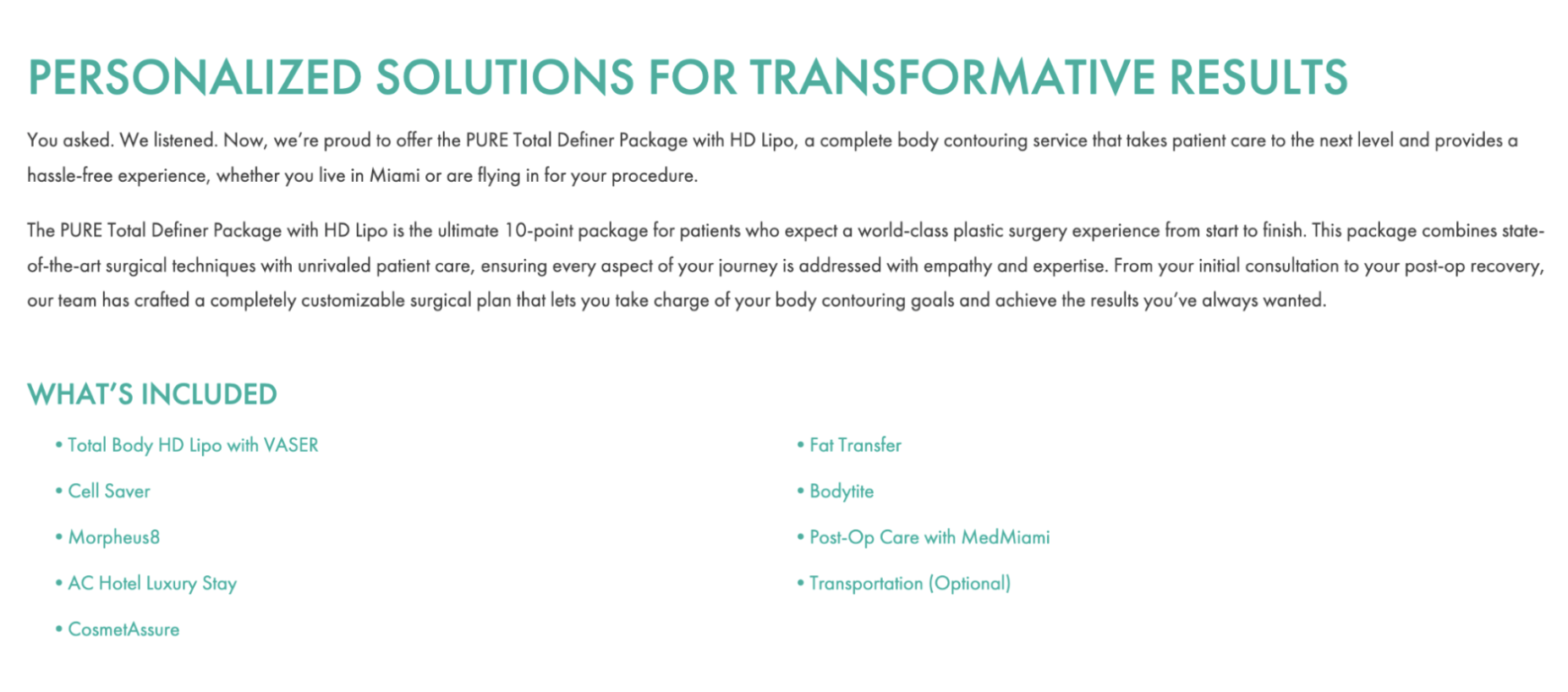
Here's why:
Increased revenue & cash flow. Bundling increases your average transaction value – and because packages are paid upfront, the money lands in your account before a single treatment is delivered.
Higher patient retention. A patient who's already committed to a three-session treatment plan doesn't disappear when things get uncertain. They already paid so they're coming back. You're not chasing them, you're not convincing them, you're just delivering the treatment they booked weeks ago. And a retained patient costs a fraction of what it takes to acquire a new one.
Showing off your expertise. Handing over a treatment menu is one thing. Saying to a patient "here's your holistic plan, here's why it works, and here's what we're going to achieve together" is another thing entirely. Packages position you as the expert who sees the full picture, not just the next appointment. Patients feel that difference. And they’re willing to pay for it.
Better marketing assets. Combined treatments deliver more dramatic results – which means better before and afters, more powerful content, and ultimately more potential patients hoping to achieve the same transformation. It compounds in the best possible way.
Start by identifying your three most popular treatments and building a bundled version of each – typically three to six sessions at a slight discount. Let me give you some examples:
- Injectable Combo – Botox for wrinkles paired with dermal fillers for volume restoration. A natural pairing that addresses both movement and structure in one visit.
- Skin Rejuvenation – Microneedling combined with PRP or Exosomes for collagen stimulation. Results-driven, science-backed, and easy to position as a premium offering.
- Tightening & Texture – RF Microneedling paired with Chemical Peels. Targets skin quality from multiple angles and gives patients visible, progressive results that keep them coming back.
The key is to build packages around treatments that complement each other clinically – not just bundle things for the sake of it. When the combination makes sense for the patient's results, the sell is easy. Price it so the patient feels like they're winning and your revenue is secured either way. Everyone wins.
At the end of the day, relying on one income stream is giving “I deleted all my apps after one good hinge date.” …You need to be smarter than that.
Stable. Strategic. Never fully dependent on one source 💅
…But I can’t “just spend more!”
Easy for anyone to say "invest in your marketing" when you're already watching every penny. The reality is that a lot of practices hitting a slow period are hitting a cash flow problem at the same time – and being told to spend more feels a little like being told to save money by buying in bulk when you can't afford the bulk purchase in the first place.
But marketing isn't optional. It's not a luxury you turn on when times are good and switch off when things get tight. If anything, going quiet during a slow period is the worst thing you can do.
So what do you do when the budget genuinely isn't there?
1. Local referral ecosystems
Your next patient is probably already in someone else's waiting room. Think about the businesses your ideal patient already trusts – a local gym, a blow-dry bar, a wellness studio, a private GP. These aren't competitors. They're allies. A simple referral arrangement – whether that's a shared discount, a cross-promotion, or just a genuine relationship – can send a steady stream of warm, pre-qualified patients your way without spending a penny on ads. The key is to be intentional about who you partner with. You want businesses that share your patient demographic, not just whoever is geographically nearby.
2. Strategic partnerships
This goes a step further than referrals – think collaborative social content and bundled offerings with complementary businesses. Some examples could include a skin clinic partnering with a nutritionist for a "glow from the inside out" event or an aesthetic practice teaming up with a luxury hair salon for a joint loyalty programme. Done well, strategic partnerships put you in front of an entirely new audience that already trusts the person vouching for you.
3. Patient re-engagement
One of your most valuable marketing assets is already sitting in your CRM – and many practices completely ignore it. Your existing patients already know you, already trust you, and have already spent money with you. Re-engaging them costs almost nothing and converts far better than cold outreach ever will.
But patient re-engagement isn't just about blasting out a discount code. Done well, it's about four things:
- Relevance. Reach out with something that actually makes sense for that patient. If someone came in for filler six months ago, a message about their treatment being due for a top-up is going to land very differently than a generic "book now" email.
- Incentives. A well-timed offer – a loyalty reward, a referral bonus, an early access deal – gives patients a reason to act now rather than "sometime soon."
- Exclusivity. People respond to feeling like insiders. "This is just for our existing patients" or "we're opening a few slots before we announce publicly" creates urgency without desperation. It feels like a privilege, not a panic sale.
- Relationship. The practices that retain patients long-term are the ones that connect with them and make patients feel remembered. A birthday message. A check-in after a treatment. A genuinely useful skin tip that has nothing to do with selling anything. Small touches that remind your patients you're thinking about them even when they're not in your chair.
None of this requires a big budget. It requires consistency, intention, and the willingness to show up even when things feel slow.
Especially when things feel slow.
Playing the Long Game is Key.
When the phone stops ringing, the worst move is panic. To slash prices, flood your feed with desperate offers, and do whatever it takes to get someone – anyone – through the door.
We've talked about this. Desperate isn't attractive. Not in aesthetics, not in dating.
After all, the goal is never actually to get that loser to call you again. He’s probably a low-value, disengaged lead that isn’t worth chasing anyway. The real goal is to build a life so full, so busy, and so genuinely good that one day you'll be out somewhere – laughing, glowing, completely in your element – and realize he never stood a chance of dimming that.
It’s no different with a market slowdown. Start building systems that can get you through the harder times today. The high-converting website. The referral networks. The packages. The re-engagement strategies. Not because a slow month is coming – but so that when it does, you're already somewhere else entirely.
Laughing. Glowing. Fully booked ✨
The good news? You have everything you need to start.
…And unlike that situationship who never texted back, this time, the outcome is entirely in your hands 😉
Frequently Asked Questions
Why has my aesthetic practice suddenly stopped getting patients?
There are many reasons, but often it’s just market timing – seasonal slowdowns, holidays, or a temporary dip in demand. And while it may not be because you’re doing something wrong, it still does highlight areas where you can improve your marketing, website, or patient engagement.
Should I just run paid ads to get more patients?
Not as a standalone solution. Paid ads can give a short-term spike, but they often attract price-sensitive patients and don’t build long-term trust. Ads work best as part of a broader strategy.
How can I use slow periods to my advantage?
Time is your most valuable currency when demand drops. Use it to fix foundational weaknesses, update branding, improve services, create educational content, and optimize your website. Strategic work now will pay off when patient flow picks back up.
How can I convert more of the traffic I already have?
Focus on trust, credibility, and expertise. Make sure your website clearly communicates your value and guides visitors through real photos, real patient stories, detailed service pages, good CTAs, and educational content. Use smart automation like AI chat to instantly answer questions and guide visitors toward booking.
What can I do if I can’t spend more on marketing?
There are low-cost or no-cost strategies that work. Build local referral networks, partner strategically with other businesses, and re-engage patients through email and SMS campaigns.
How can I attract patients without sounding desperate?
Build authentic trust signals and content that answers real patient questions. Highlight your expertise, showcase real results, and use marketing channels thoughtfully to educate and engage. Don’t focus only on price or discounts; show the real value and experience your practice offers.
What role do alternative revenue streams play when patient flow slows?
Diversifying your services – skincare, gift cards, packages, or non-surgical treatments – keeps revenue moving and reduces dependence on surgical bookings alone.
Too Long? Here's the Short Version
Running an aesthetic practice during a slow period feels a lot like being ghosted – confusing, stressful, and way too easy to spiral over. But panic is the worst thing you can do. Slashing prices and cutting your marketing budget only makes things worse.
Here's what actually works: use paid ads strategically (not desperately) to buy yourself breathing room. Use the extra time wisely – fix the things you never had time for when you were busy. Focus on attracting new traffic through valuable content, and make sure your website converts the visitors you already have, not just chases new ones. Diversify your revenue with skincare retail, packages, and gift cards so you're never fully dependent on one income stream. And start thinking about AIO (Artificial Intelligence Optimization) – because the way patients find providers online is changing faster than most practices realise. And if the budget is genuinely tight? There are ways around that too – from local referral partnerships to re-engaging the patients already sitting in your CRM.
At the end of the day, how you handle a slowdown comes down to strategy. But the real secret is the system you build while things are good – so that when things get quiet, you're already three steps ahead.
Running an aesthetic practice during a slow period feels a lot like being ghosted – confusing, stressful, and way too easy to spiral over. But panic is the worst thing you can do. Slashing prices and cutting your marketing budget only makes things worse.
Here's what actually works: use paid ads strategically (not desperately) to buy yourself breathing room. Use the extra time wisely – fix the things you never had time for when you were busy. Focus on attracting new traffic through valuable content, and make sure your website converts the visitors you already have, not just chases new ones. Diversify your revenue with skincare retail, packages, and gift cards so you're never fully dependent on one income stream. And start thinking about AIO (Artificial Intelligence Optimization) – because the way patients find providers online is changing faster than most practices realise. And if the budget is genuinely tight? There are ways around that too – from local referral partnerships to re-engaging the patients already sitting in your CRM.
At the end of the day, how you handle a slowdown comes down to strategy. But the real secret is the system you build while things are good – so that when things get quiet, you're already three steps ahead.